Mark Zuckerberg Is Cloning Himself With AI. Here's What Every Founder Can Learn From That (and What to Avoid).
Opinions expressed by Entrepreneur contributors are their own.
Key Takeaways
Do not wait until you are overwhelmed to systematize your thinking.
Do not confuse presence with leadership.
Do not scale technology before you have scaled trust.
Do not neglect the power of your personal brand as a business asset.
Do not try to be everywhere. Decide where you are irreplaceable.
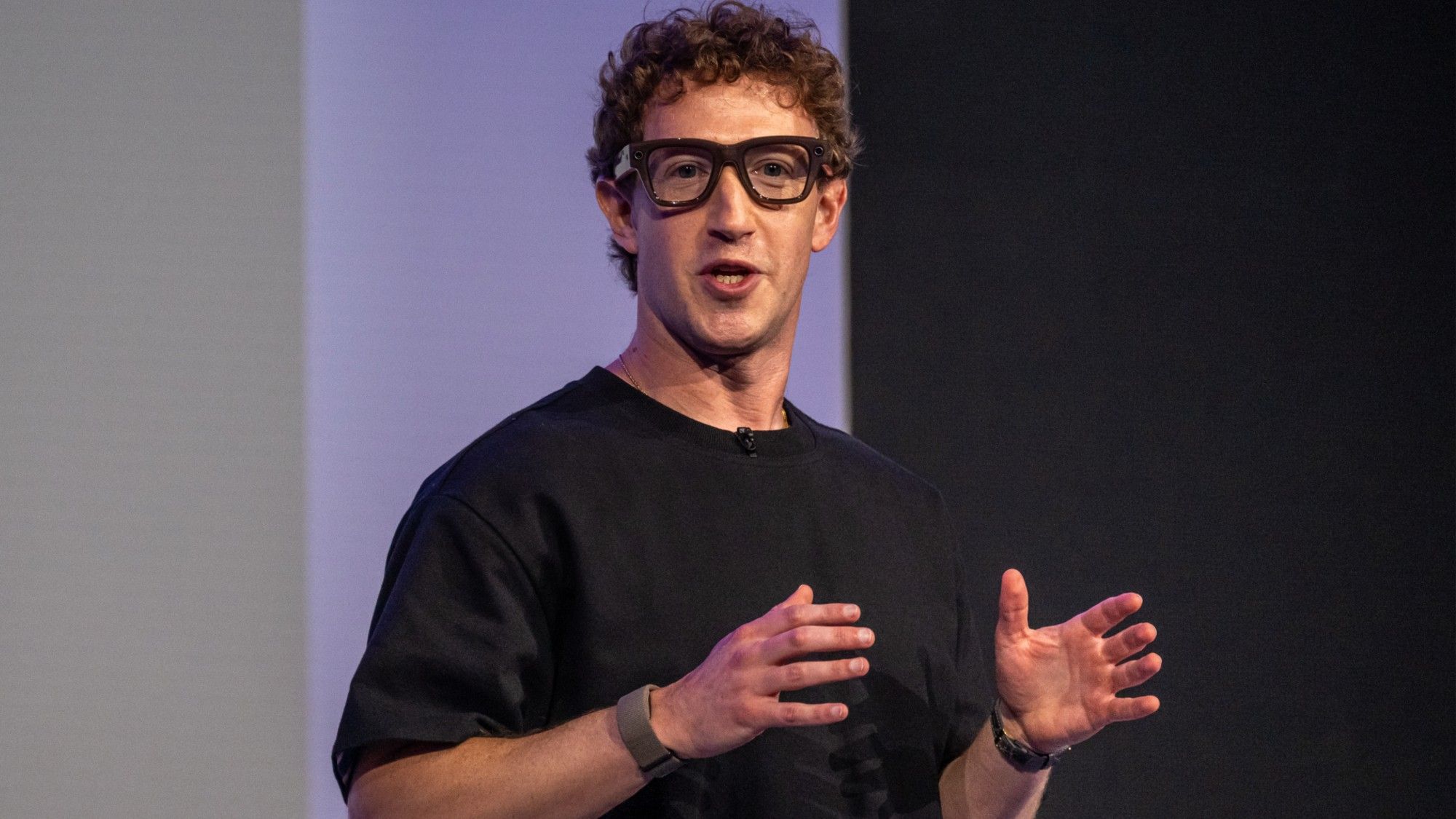
Mark Zuckerberg just made headlines again, not for a product launch or a congressional hearing, but for something that cuts right to the heart of every founder’s biggest hidden problem: You cannot scale yourself.According to a recent report, Meta is building an AI version of Zuckerberg trained on his mannerisms, tone, public statements and views on company strategy. The goal is to let Meta’s 79,000 employees feel more connected to their CEO when they cannot get direct access to him. Weeks earlier, Zuckerberg revealed he was also developing an AI chief of staff, a personal agent that retrieves answers he would normally pull through layers of people to find.Call it bold. Call it visionary. Call it ChatGPZuck.
But before every entrepreneur runs out to clone themselves in AI, there are some hard, honest lessons hiding in this story. As I explored in “My Biggest Marketing Failures Taught Me More Than My Viral Successes,” the campaigns that crash teach you more than the ones that go viral, and the same is true for strategic decisions.The problem Zuckerberg is actually solvingWith 79,000 employees, Zuckerberg cannot sit down with everyone. His vision, values and decision-making instincts get diluted as they pass through layers of management. By the time a mid-level employee understands what the CEO actually thinks about a strategic question, it has been filtered through five different interpretations.
Sound familiar? You do not need 79,000 employees to feel this pain. It happens at 10. It happens at five. The moment you hire your first team member, your thinking starts getting lost in translation.This is the real scaling challenge of entrepreneurship. It is never just about revenue, systems or funding. It is about transmitting your vision with fidelity, at speed, without you being in every room.Zuckerberg’s AI solution is the most ambitious version of something every founder needs to solve, even if your answer is a documented culture playbook, a values-based hiring process or a weekly video message to your team. The instinct is right. The lesson for the rest of us is in the details.What not to do: Hard lessons most entrepreneurs learn too late1. Do not wait until you are overwhelmed to systematize your thinking
Zuckerberg is only doing this now, with 79,000 people and billions in resources. Most founders wait far too long to capture and codify how they think. As we explored in The Hero Trap, founders who build their companies as indispensable heroes find that decisions funnel upward, teams wait instead of owning, and dependency quietly becomes culture.By the time they realize it is a problem, institutional knowledge is bleeding out every time an employee leaves, every time a client relationship gets handed off and every time the founder has to personally re-explain the vision from scratch.This is also why so many companies hit a ceiling. As we break down in “Why Companies Get Stuck at $10M Revenue,” growth requires fundamentally different capabilities than what got you there, and that starts with documenting how you think, not just what you do.2. Do not confuse presence with leadership
One of the most common mistakes founders make is believing that their being in the room is what drives results. So they attend every meeting, approve every decision and answer every message, until they burn out or become the single biggest bottleneck in their own business.Zuckerberg’s AI experiment is really an admission: He cannot be present everywhere, and yet his presence matters. The solution is not to be everywhere. The solution is to be clear enough in your communication, your culture, and your documented principles, so that your thinking travels without you.Most organizations do not fail because they lack ideas or ambition. They fail because they keep protecting the familiar. When teams can see how and why choices are made, trust deepens, politics fade and culture becomes self-sustaining.Great leadership is not about presence. It is about clarity.3. Do not scale technology before you have scaled trustThis one is the cautionary note embedded in the Zuckerberg story. An AI clone trained on public statements and company strategy is only as good as the authenticity and consistency of what it was trained on. If there is a gap between what the CEO says publicly and how the company actually operates, that AI will confidently deliver the wrong answers at scale.The same principle applies to every business decision you make as a founder. Our data shows that cultural misalignment and execution gaps are among the costliest issues mid-market companies face.Automation, AI tools and technology can scale your processes, but they will also scale your inconsistencies, your unaddressed cultural issues and your internal misalignments. Fix the human problems before you automate them.
4. Do not neglect the power of your personal brand as a business assetMeta is betting that employee connection to Zuckerberg, as a person, as a thinker and as a leader, is valuable enough to replicate with AI. That is not a technology decision. That is a personal branding decision.Your story, your perspective and your public voice as a founder is one of the most underutilized assets in your business. When we made the deliberate branding decision behind the Bullzeye name, it was a direct bet that distinctiveness creates curiosity, and curiosity creates connection. That same principle applies to every founder’s personal brand.And in an era where AI search is replacing website visits with instant decisions, the founders who remain visible are the ones who have built authentic personal authority, not just SEO rankings.
Your personal story as a founder is not separate from your business strategy. It is part of it.5. Do not try to be everywhere. Decide where you are irreplaceable.Zuckerberg cannot clone everything about himself. There are conversations, decisions and moments that require the real person. The AI serves the routine touchpoints. The man shows up where it counts.Every entrepreneur has a version of this choice to make. Where is your time and presence genuinely irreplaceable? Where are you just filling space because you have not built the systems and trust that would let you step back?
Audit your calendar with brutal honesty. Identify where you are the bottleneck and where your time is genuinely strategic.The bigger picture for entrepreneursWhat Meta is doing is a glimpse at where business is heading. AI tools will increasingly allow founders and leaders to extend their thinking, their communication and their decision-making across their organizations in ways that were not possible before.But the winners will not be the ones who adopt the technology first. Breakthrough growth requires strategic bets that feel uncomfortable, and the most important bet any founder can make right now is on the fundamentals: clarifying their values, building trust with their teams, documenting how they think and creating cultures where people can lead without a clone in the room.The future belongs to those who understand that strategy is not about hourly advice. It is about shared momentum. And if you are leaving revenue on the table, it is rarely because of a missing tactic. It is usually because the foundation has not been built yet.
Zuckerberg can afford to experiment with AI at scale. Most entrepreneurs cannot. But every entrepreneur can start today on the fundamentals that made the experiment worth building in the first place.The real lesson is not “build an AI version of yourself.” The real lesson is: Be clear enough, consistent enough and principled enough that one day, you could.