Israel-Lebanon Update: UN Issues Warning Over Potential War Crimes as Ceasefire Extended
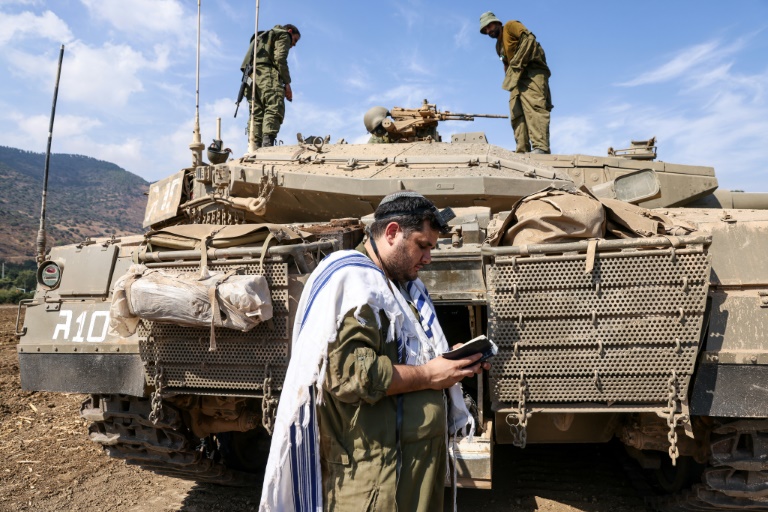
Israeli attacks on Lebanon and Hezbollah rocket fire into Israel during the first three weeks of the latest Israel-Lebanon escalation may amount to serious violations of international humanitarian law, the United Nations has warned in a new report released in Geneva on Friday.Almost uninterrupted exchanges of fire have continued along the border since 2 March, when Hezbollah launched rockets at Israel in response to US–Israeli strikes on Iran. Israel replied with a large-scale offensive that has since killed more than 2,400 people in Lebanon, according to the UN, and pushed its forces into a belt of Lebanese territory that they continue to hold along the frontier under what officials describe as security operations.
Israel-Lebanon maritime border claims
UN Details Possible War Crimes in Israel-Lebanon EscalationThe UN human rights office said its assessment focused on the first three weeks of the Israel–Lebanon flare-up, zeroing in on attacks that struck populated areas and residential buildings on both sides of the border. Investigators have been examining how targets were selected, what kinds of weapons were used and whether civilians were adequately warned before strikes.Thameen Al-Kheetan, spokesperson for the Office of the High Commissioner for Human Rights (OHCHR), said the agency had documented several Israeli strikes that hit, and in some cases destroyed, multi-storey residential buildings in Lebanon, 'killing entire families.' Such incidents, he said, may amount to 'serious violations of international humanitarian law', the framework that governs how wars must be fought.
One of the clearest examples cited by the report is an air raid on 8 March in the town of Sir el-Gharbiyeh, in Lebanon's Nabatieh governorate. An Israeli strike levelled a multi-storey residential building there, killing at least 13 civilians sheltering inside.The dead included five women, five men, two boys and a girl, according to the UN's count. No information was provided in the report about any military presence in or near the building, leaving the lawfulness of the attack in severe doubt.The UN also flagged what it called 'ineffective warnings' given to residents before some strikes in Lebanon, and noted that in other cases no warning was issued at all. Under international humanitarian law, parties to a conflict are obliged, where circumstances permit, to warn civilians of impending attacks so they can flee or seek shelter. When warnings are absent or meaningless, the threshold for potential illegality is sharply lowered.
Hezbollah did not escape scrutiny. The UN report concluded that the group had fired unguided rockets into Israel that lacked the precision necessary to reliably hit military targets.Instead, these weapons damaged buildings and civilian infrastructure. That pattern, the UN said, also likely violated international humanitarian law, which prohibits indiscriminate attacks that fail to distinguish between combatants and civilians.There was no immediate response from the Israeli military or from Hezbollah to the UN's findings. Silence at this stage is perhaps unsurprising. A formal legal assessment from Geneva carries a political cost, and both sides will be acutely aware that any admission or misstep could resurface later in courtrooms or diplomatic forums.
Lebanon
ABC News Australia/YouTube
Journalists, Israel–Lebanon Fire and War Crimes QuestionAlongside its broader investigation into the Israel–Lebanon front, the OHCHR singled out a series of attacks on journalists, warning that if such strikes are proven to be deliberate they could amount to war crimes.On Wednesday, an Israeli air strike in the southern Lebanese village of at-Tiri killed veteran reporter Amal Khalil and wounded her colleague Zeinab Faraj. Both worked for the Lebanese newspaper Al Akhbar. Lebanon's Ministry of Public Health said rescue workers who initially tried to reach Khalil came under Israeli fire and were forced to pull back, leaving her without urgent medical care.Khalil was the ninth journalist killed in Lebanon this year, a toll that is beginning to form its own grim ledger within the wider conflict. Lebanese Prime Minister Nawaf Salam accused Israel of 'crimes against humanity' over her death, a charge that goes further than the UN's language and will require a much higher evidentiary bar to substantiate.
The UN human rights office has not yet drawn final legal conclusions on the at-Tiri strike. Its position for now is measured but stark. If investigators eventually determine that journalists were intentionally targeted as journalists, or that attacks were launched with reckless disregard for their clearly identifiable presence, those responsible could face war-crimes allegations.Nothing in the UN report constitutes a judicial ruling and no independent court has yet tested the evidence, so all legal characterisations remain allegations that should be treated with caution. Yet the direction of travel is clear enough. What began as another border flare-up has, in the UN's view, moved into territory where the laws of war are being pushed, and possibly broken, on both sides of the Israel–Lebanon line.