Millions earmarked to tackle Northern Ireland’s ‘epidemic’ of violence against women
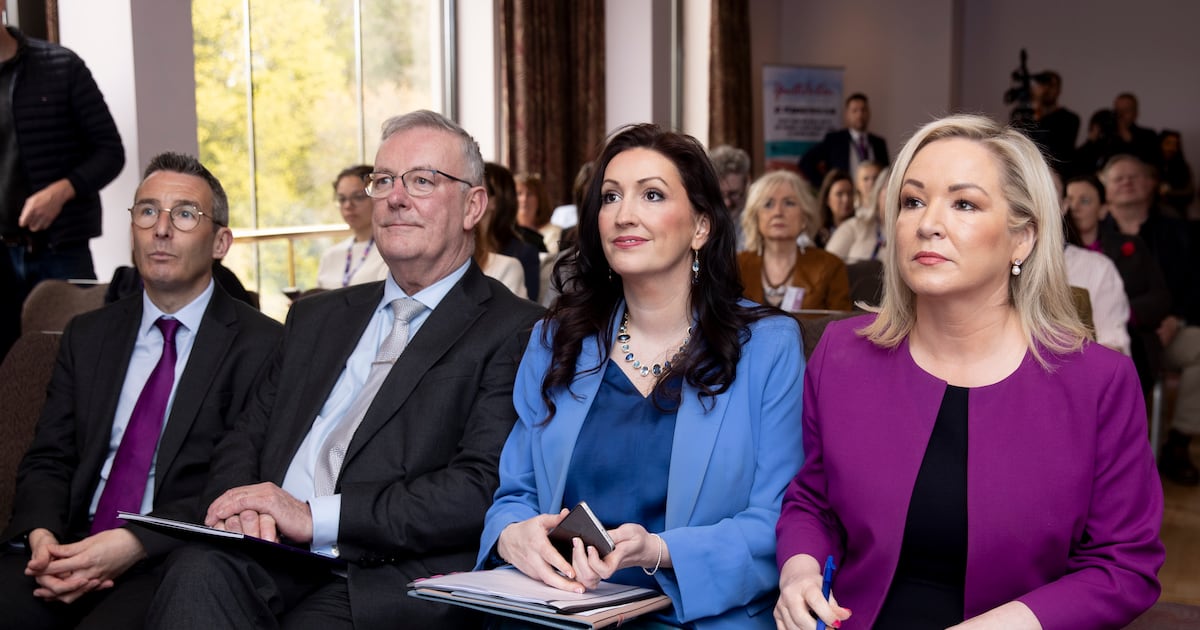
Tackling misogyny in young men will be central to the next phase of a Stormont plan to end violence against women and girls, Northern Ireland’s First Minister Michelle O’Neill has said.As femicide rates continue to rise in the North, O’Neill and Deputy First Minister Emma Little-Pengelly confirmed on Tuesday that a further £2 million has been earmarked for the second stage of a seven-year Executive strategy.Youth leaders, student nurses and academics were among those who attended the launch and gave accounts of training delivered in schools, sporting organisations and hospitals to address gender-based violence since the programme began two years ago.Referring to the violent deaths of 30 women in the North since 2020, O’Neill described the levels of violence as an “epidemic” and a “scourge of our society”.READ MOREIran dismisses US ‘ploy’ after Donald Trump extends ceasefire ‘indefinitely’Will Ryanair have to follow Aer Lingus and cut flights?Teacher ended up in car chase with gardaí after ‘unwittingly’ eating cannabis-laced cakeVaradkar’s urban-rural comments were quick to fuel tempers. But what does the data say? “Cultural change takes time ... whilst we’re making strides forward, we’ve a lot more to do,” she added.“Working with young boys and younger men in particular around behaviours, misogyny, coercive control and helping young people to understand what healthy relationships look like ... that’s a really good place to start [for phase two].”The North’s gender-based violence strategy has received a £5 million (€5.75 million) investment since 2024 compared to the €363 million strategy announced by the Government in the Republic in 2022.Addressing the impact of the first phase amid concerns about the number of women killed, Little-Pengelly said the value in the strategy is in “what you don’t see”.“It’s those who don’t get murdered and do not live with violence every day,” she added.[ It’s the ‘subtle signs’: Hairdressers in North get police training to spot coercive controlOpens in new window ]At the heart of the plan is the “key principle of prevention” through training in schools and youth groups which will require “sustained investment”, she said.“Sadly, the strategy was never immediately going to end violence against women and girls. We said that at the time,” she said.Criticism of online platforms promoting misogyny was also made by Little-Pengelly, who described social media as “an absolute sewer”.She spoke of the personal impact of online threats she received and suggested that the response demonstrated that societal attitudes had to change.“I’ve had somebody who has been jailed for threatening to kill me online. Some of our newspapers etc barely referenced it,” she told reporters.“When someone who is the Deputy First Minister, jointly leading this Executive, has somebody who is jailed for quite a period of time for a threat to kill and yet there will be focus on other issues ... to me that is an indication that people are not taking these issues seriously. People do not understand the impact that has on a woman, on a person in terms of the fear people feel.“It’s one example I personally experienced and there was a conviction, that person was jailed under the Online Safety Act. But more must be done.”