Stoner Movies Are Dead, and Weed Killed Them
Weed movies just don’t hit like they used to, huh?
It’s 4/20 in 2026, and never before has the nation’s unofficial marijuana holiday felt less potent in TV and film. That’s not because our tolerance for stoner comedies, or even dramas, has gone up. If anything, today’s audiences are more primed than ever to enjoy stories that help them escape the mundanity of daily life. Rather, it’s because the culture around weed, and the drug itself, have fundamentally changed.
That shift is measurable. As of the mid-2020s, a majority of U.S. states have legalized marijuana in some form, and legal cannabis sales have ballooned into a multi-billion-dollar industry worldwide. Americans spend tens of billions annually on THC, CBD, and hemp-derived products. What was once considered an illicit, communal, and vaguely transgressive symbol is now sold as a mainstream product through sleek dispensaries that, at least in California, seem to crop up around every corner.
As weed’s role in society has morphed, so has its part in pop culture. On the big screen, marijuana has been watered down to the point of near invisibility. There was a time when films like “Fast Times at Ridgemont High” (1982) could turn a single burnout, played by Sean Penn, into a generational archetype — or newer classics like “Pineapple Express” (2008) could sustain entire action-comedy routines around the paranoia of getting high. But in the wake of the genre’s unexpected death rattle, still echoing somewhere between “We’re the Millers” (2013) and “The Beach Bum” (2019), stoner cinema lost its edginess because the topic of weed got dull.
It’s been years since movie theaters have seen anything resembling a true stoner classic. Even “Pizza Movie” — a recent absurdist comedy from Brian McElhaney and Nick Kocher, hailed by some as a stoner-adjacent triumph — sidesteps the explicit use of marijuana, swapping what would have been weed in a script from a decade ago for a vague, experimental drug with unpredictable effects.
The vibe is similar, but the substance is definitely not. So, what happened to the stoner movie? And, re-rolled by the right generation of indie filmmakers, can this joint still be saved?
“Fast Times at Ridgemont High” (1982) ©Universal/Courtesy Everett Collection
Stoner Movies vs. Movies You Watch Stoned
For as much as weed has faded from the big screen, the experience of watching movies while high has arguably never been better. After all, this is the era of “Avatar,” “Barbie,” “Dune,” and the Sphere. We’re in a moment defined by maximalist entertainment engines that were specifically designed with audiences’ dopamine levels in mind. Even at home, streaming has expanded the 420-adjacent possibilities, offering an endless supply of online programming explicitly curated for viewers to get stoned to. (Shout out to Bret Berg and the Museum of Home Video, a delirious digital collage of found footage and VHS ephemera, also known as “College Radio for the Eyes!”)
But stoner cinema isn’t just any old thing you choose to watch while you’re getting stoned. (If it were, “SpongeBob SquarePants” and the Adult Swim Yule Log would be available on the Criterion Collection.) Rather, it’s a genre of filmmaking where either the act of, or philosophy behind, imbibing in weed is the story’s point. These are films in which marijuana shapes not just the tone, rhythm, and plot, but also the worldviews of the characters themselves. Going by that definition, weed isn’t incidental so much as foundational.
“Fear and Loathing in Las Vegas” (1998) ©Universal/courtesy Everett / Everett Collection
That distinction used to matter a lot more. From the bastardized moral hysteria of “Reefer Madness” (1937), to the countercultural cool of “Cheech & Chong,” and even into the slacker comedies directed by Judd Apatow, Paul Thomas Anderson, and more, stoner movies once occupied a very specific lane in American and Canadian filmmaking. They were transgressive without being overtly terrifying, and rebellious without being too political. Mirroring the free-love movement in music, 420 films were once a space where audiences could laugh at the absurdity of prohibition, authority, and their own flawed decision-making all at once — without judgment.
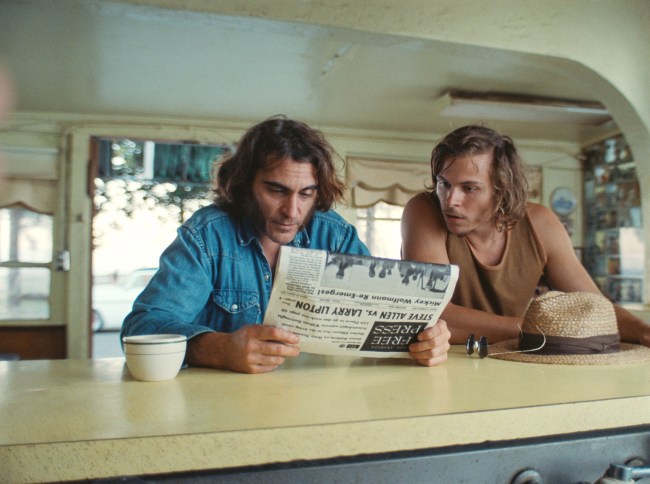
The genre hit its stride in the late-’90s and early-2000s, as the formula became a reliable commercial play. Cult classic “The Big Lebowski” (1998), unexpected smash-hit “Dude, Where’s My Car? (2000), and more THC-infused comedies built their scripts around the escalating consequences of constantly getting high, often grounding that chaos in the weed community’s formerly sweet, dopey sincerity. Even into the 2010s, the template had enough cultural friction to generate hits, with weed functioning as both joke and narrative catalyst in favorites like “This Is the End” (2013) and “Inherent Vice” (2014).
“Dude, Where’s My Car?” (2004)©20thCentFox/Courtesy Everett Collection
How Legalization Flattened the Stakes of the 420 Genre
But as marijuana has drifted away from the margins, that innate artistic friction has weakened in TV and film. The act of getting high no longer carries the same inherent tension, legal or otherwise, and the niche genre that stoner filmmakers once built around the drug has struggled to justify its own existence. That’s because legalization didn’t just change how Americans buy weed, but how many of us see it.
For decades, marijuana came pre-loaded with narrative stakes. Buying weed meant interacting with the black market, and carrying it meant risking arrest. Smoking or otherwise ingesting THC meant hiding it from your parents, teachers, bosses, or the cops, and that low-level, constant anxiety gave stoner movies their compelling shape. Danger kept the plot moving back then, but in 2026, an adult seen smoking weed in a series or movie isn’t automatically in trouble. More likely, they’re just portraying a person with a disposable income who is living in a specific state. With no real reason for weed-using characters to panic or cover their tracks, it’s harder to build stories around the act of getting high.
“We’re the Millers” (2013) ©Warner Bros/Courtesy Everett Collection
Marijuana use has also become easier to obscure. The rise of vapes — many of which contain nicotine but look identical to the devices used for weed — introduce a kind of plausible deniability for many characters. A quick hit of something, even by teen archetypes, no longer has to signal a specific substance being used. Are they high, or just vaping in any given scene? That ambiguity effectively eliminates a visual shorthand that once defined the stoner genre at a glance.
Of course, pop culture hasn’t moved away from drugs so much as it has moved past weed. As marijuana has normalized in the real world, fictional entertainment has shifted toward substances that still carry serious risk. Many of those stories are fundamentally darker. Just take a look at the evolution of Sam Levinson’s “Euphoria.” While the still-popular HBO series has always engaged with the subject of harder drugs, its increasing focus on opioids and fentanyl in Season 3 has solidified into a radically different tone. Beats that might once have been framed through a hazy, absurdist lens now play as something much more fatalistic and frightening.
“Euphoria” (Season 1, Episode 7)
That divide in mood might help explain why marijuana never really functioned as a “gateway drug” in cinema the way it did in decades of public-access rhetoric. For movies, weed existed in its own sort of ecosystem as a world of petty rebellion and elastic logic, where characters could spiral into genuine obstacles without necessarily becoming irredeemable people. Harder drugs don’t always offer the same flexibility, precisely because their consequences are so immediate and too often irreversible.
Which leaves marijuana in an awkward middle ground as a substance that’s too normalized to generate inherent conflict, and too mild to drive high-stakes drama. Legalization didn’t kill the stoner movie on its own, but it ruined the thematic terrain those films once thrived on.
“Pineapple Expres” (2008) ©Columbia Pictures/Courtesy Everett Collection
When Did Weed Stop Feeling Funny?
If legalization flattened the stakes around weed, it also changed the drug in a way that makes abusing it feel like less of a joke. As marijuana has become more accessible, it’s also become more potent, sometimes to an absurd degree. The mellow highs that once defined stoner comedies have increasingly been replaced by experiences that are sharper, stronger, and, for some users, genuinely upsetting. That shift makes it harder to mine the same kind of universal humor cinephiles once associated with weed.
Revisiting something like Gregg Araki’s “Smiley Face,” you can feel that difference immediately. The 2007 cult film hinges on a simple premise: Anna Faris’ delightfully hapless Jane accidentally eats an entire tray of weed-infused cupcakes and spends the rest of her day spiraling through Los Angeles in a state of escalating confusion. It’s a performance and a concept that turns overconsumption into something enjoyably ridiculous. The conflict feels real enough to drive the plot, but the situation is soft enough to stay funny. Even viewers who have never touched weed in their lives can track the cartoonish logic of what’s happening: Jane got too high, and now everything is just a… little… bit… off.
“Smiley Face” (2007) ©First Look Pictures/Courtesy Everett Collection
That baseline is harder to pin down in 2026. Today’s weed isn’t just capable of making people giggly or disoriented. The wrong strain or concentration can knock someone completely sideways, and reporting from The New York Times and other outlets has tracked a rise in cannabis-related emergency room visits in the years following legalization, often tied to high-potency products that are easy to overconsume.
Researchers have also documented the emergence of cannabinoid hyperemesis syndrome, a condition linked to chronic marijuana use that can trigger severe nausea and vomiting (ironically, the exact opposite of the drug’s medicinal promise). The slang term “scromiting,” which describes painful, cyclical vomiting punctuated by literal screaming, has entered the conversation as a result. It might be relatable for some users, but it isn’t remotely funny.
That complicates the fantasy that classic stoner movies once relied on. When the worst-case scenario of overindulging was losing an afternoon or buying too many snacks, the genre could stretch that experience into something playful and surreal. But when the drug’s ceiling is so much higher, and the floor for its consequences is so much lower, the same premise doesn’t go as far.
“The Big Lebowski” (1998) ©GramercyPictures/Courtesy Everett Collection
Can Indie Film Save Stoner Cinema?
None of this is to suggest that weed itself is uniquely dangerous, or that it can’t still be enjoyed responsibly. But the rapid evolution of the legal cannabis industry, from potency levels to product design, has outpaced the cultural language we use to talk about it. Regulation remains uneven, education is inconsistent, and the line between a manageable high and a harmful one isn’t always clear, especially for younger or inexperienced users.
That ambiguity bleeds into storytelling. If getting too high can swing from mildly inconvenient to physically distressing, the comedic sweet spot that once defined stoner movies has become much, much harder to locate. The joke doesn’t land the same way if the audience isn’t sure whether they’re supposed to laugh or worry, and without that shared understanding, the genre loses the relatable flavor that made it work in the first place.
The only real way forward may be to rebuild that feeling from the ground up. Not just through movies about weed, but through movies that recreate the communal experience of using weed as another kind of special event worth celebrating. Otherwise, 420-friendly cinema risks becoming what it once parodied as a hollow ritual movie lovers may choose to puff, puff… pass.