Foreign Office issues Greece travel update as holiday hotspot suspends EU rule
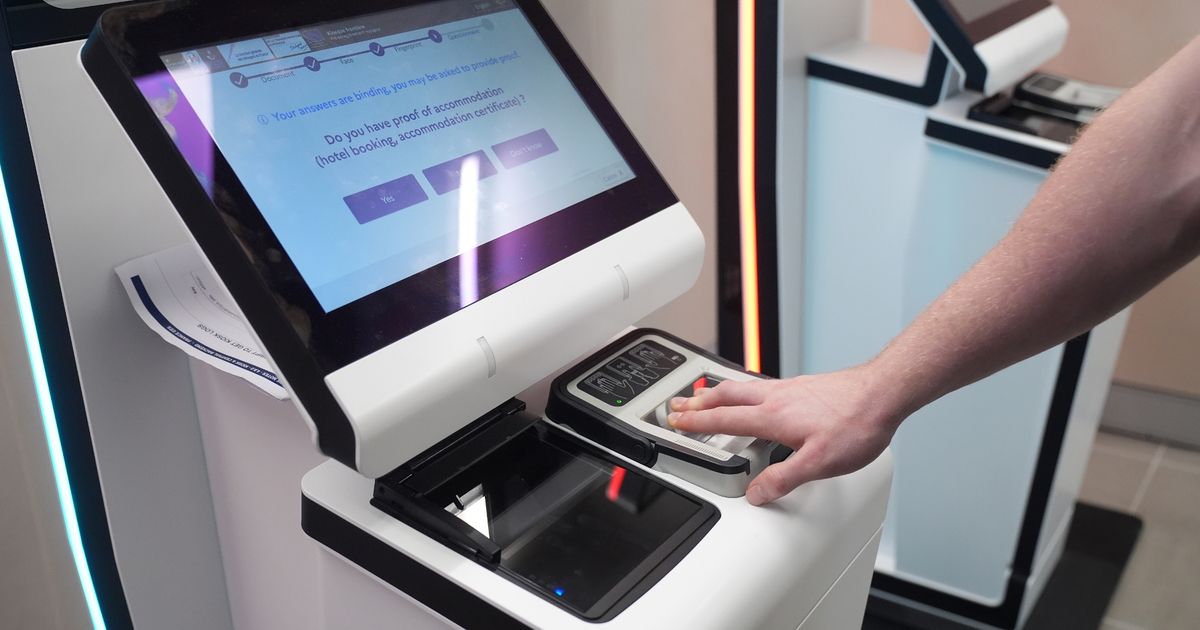
The Foreign Office has issued an update on travel to Greece for Brits, and it's good news.Since the European Union's (EU) Entry/Exit System (EES) was fully rolled out earlier this month, there have been major travel disruptions. Holidaymakers have reported substantial queues and delays at airports across Europe, with some lasting up to four hours, while hundreds have missed flights as they try to pass through the new digital border system.In a bid to ease travel chaos, Greece has chosen to waive the EU requirement for Brits to submit fingerprints and facial scans at airport border controls. In a statement from the Greek Embassy, they announced: "Update for British passport holders travelling to Greece.READ MORE: Ryanair issues warning to customers - and it's not down to fuel crisisREAD MORE: Major EU travel rule change from Wednesday could see UK travellers denied entry"In the framework of the implementation of the Entry/Exit System, as of 10 April 2026, British passport holders are exempt from biometric registration at Greek border crossing points." There was no suggestion of how long the exemption would remain in place, but soon after, the Foreign, Commonwealth & Development Office (FCDO) revised its travel guidance for Greece.In an update on Monday, 20 April, the FCDO stated: "Greek authorities have indicated that they will not collect biometric data (fingerprints and photos) for UK travellers as part of EES. Follow the advice of authorities on the ground. If you are a resident in Greece, make sure to show your residence documentation at passport control to ensure you are not registered in EES."Greece opted to ditch the new biometric security measures amid concerns about the significant travel chaos they were causing at airports, severely impacting holidaymakers. The relaxed EU rules from Greece are now hoped to improve travel for Brits into the country, allowing for a smoother journey without gruelling wait times and unnecessary delays.Noting the impact of the EES, Luke Petherbridge, director of public affairs at ABTA, said: "While for many the travel experience remains smooth, we’re disappointed and frustrated to see some passengers being caught up in delays due to EES."Abta has been warning destinations and the (European) Commission for some time about the need for proactive steps to be taken to avoid delays, including the full use of contingency measures to stand down biometric checks at busier times, and adequate staffing, especially at peak times."The EES was fully implemented across European airports on April 10, 2026, and requires all Brits travelling to the Schengen area to "create a digital record" and register their biometric details, such as fingerprints and a photograph. It's needed for their first arrival at the airport border in the Schengen area, and after the initial registration, the EES remains valid for three years.Countries in the Schengen area include: Austria, Belgium, Bulgaria, Croatia, Czechia, Denmark, Estonia, Finland, France, Germany, Greece, Hungary, Iceland, Italy, Latvia, Liechtenstein, Lithuania, Luxembourg, Malta, Netherlands, Norway, Poland, Portugal, Romania, Slovakia, Slovenia, Spain, Sweden, and Switzerland.However, as it stands, Greece is the only country to relax the EU requirements for Brits. The EES system is not required for travel into the Republic of Ireland and Cyprus, as they are not within the Schengen area.For more information on the new EES system, visit the government website.Do you have a travel story to share? Email webtravel@reachplc.com