I went halfway around the world to attend the best match in football - I'd never go back
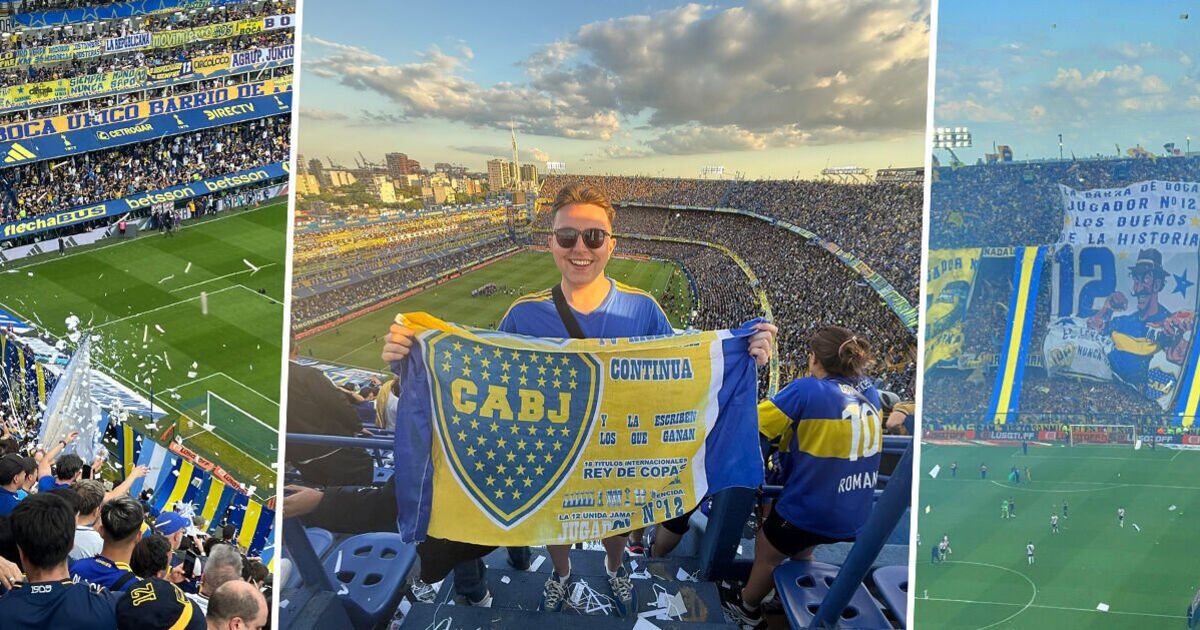
I fulfilled a lifelong dram of attending Boca Juniors vs River Plate (Image: Express Sport)Most kids dream of going to Disneyland, but I was different. Ever since developing an infatuation with football as a young boy, there was one fixture that stood out above the rest: Boca Juniors vs River Plate.Seeing clips of the Superclasico as a youngster must’ve been what it was like for those watching NASA land humans on the moon in the 1960s and 70s. The people were real, just like me, but they were from a completely different world.Related articles Abandoned £41m World Cup stadium was sold for £430k after being left to rot FA Cup final stadium fallen into disrepair after going untouched for years Unlike our celestial neighbour, though, Buenos Aires - home to both Boca Juniors and River Plate - was much more accessible. So that’s why last year, now fully into adulthood but still infatuated with the Superclasico, I took myself to the Argentine capital for a two-week-long football pilgrimage.Walking the streets of Buenos Aires didn’t quite give off the same vibes as Neil Armstrong setting foot on the moon. In fact, waves of Italian and Spanish immigration in the late 19th and early 20th centuries mean it feels incredibly European.But as soon as you venture a little further out of the main city walls and visit one of the city's many football stadiums, that’s when things start to feel different. My first taste of football in Buenos Aires was a humble one: Excursionistas vs Flandria in Argentina’s third division.Never heard of them? Well, me neither. At least not until arriving at the 6,500 capacity stadium on the north-eastern side of the city. It was fun though, and I’d figured if I was to truly appreciate what was to come the following day, a sampling of the country’s other footballing delicacies would be necessary. I stood in close enough proximity to the hinchada (the section of the fanbase who sing the loudest) for it to be the perfect taster.On that same Saturday as Excursionistas vs Flandria, there was time to squeeze in another serving, this time the Liga Profesional contest between Huracan and Newell's Old Boys. The Estadio Tomas Adolfo Duco might’ve been half empty (Huracan were having a disastrous season and Argentine supporters will vote with their feet when it comes to showing support), but the stadium was mighty, and the fans in attendance made plenty of racket.The ticker-tape welcome was a sight to behold (Image: Express Sport)I was ready. At least I thought I was. Waking up on Sunday morning was nerve-racking. Back home, the club I have a season ticket for, Manchester City, were taking on Liverpool in a gigantic Premier League fixture. I didn’t give it a second thought. The Superclasico was the only meal on today’s menu.‘Arrive four hours before kick-off as things outside the stadium can get chaotic with the police,’ one of the several English guides to attending a Superclasico match read. ‘Yeah right,’ I thought as I hurtled through the streets of Buenos Aires towards Boca’s La Bombonera in the back of a local taxi. A pepper-spray encounter and several stampedes from the police later, I was put firmly in my place.The ordeal of getting into the La Bombonera is a separate story for another time. All I’d say to any prospective visitors… check which entrance your ticket is assigned to well in advance, because when you’re through the extensive security checks that start about a mile out from the stadium and are NOT well signposted at all, getting back out of them becomes a mission in itself.So you might be thinking, ‘Is that the reason he wouldn’t return? Because of a little argie bargie (no pun intended) with the local coppers? Back in my day we-.’ Nope. Quite the opposite.Everything that followed the initial complications getting into the stadium was so pure that it would be impossible to ever try to replicate that same sensation. The colours specifically. The contrast of the blue on the yellow was so striking, as was the density of people packed into every corner and crevice of the famous old stadium.The colours and density of La Bombonera was the most striking part (Image: Express Sport)The football itself was abysmal. It made Mikel Arteta’s Arsenal side look like the Harlem Globetrotters. But anyone who knows anything about Argentine football knows it isn’t about what happens on the pitch, because the real action comes in the stands.The recibimiento chief among that. Its direct Spanish to English translation is ‘reception’ or ‘welcome’, but from a football point of view, there’s nothing quite like it. The whole thing begins well over an hour before kick-off, but is taken up a notch about 20 minutes before the players come out of the tunnel.I was blessed to have witnessed a genuine ticker-tape welcome for the Boca players. It became synonymous with Argentine football during the 1978 World Cup, but contrary to popular belief isn’t all that common in the modern-day supporter scene. For this Superclasico though, the Boca hinchadas had instructed fans all across the stadium to throw the thin slices of cut-up newspapers into the sky as the Boca players emerged from the tunnel.There’s another phenomenon called the ‘Bombonera shake’, whereby the terraces in the upper tiers of the 57,000 capacity stadium tremble under the sheer force of the celebrations. It’s quite unnerving at first and would definitely fail a safety test in the UK. But by the time Miguel Merentiel had scored Boca’s second of the match, I’d succumbed to the shake. I was at one with La Bombonera.I could never return for another Superclasico, because nothing could ever compare to the first.