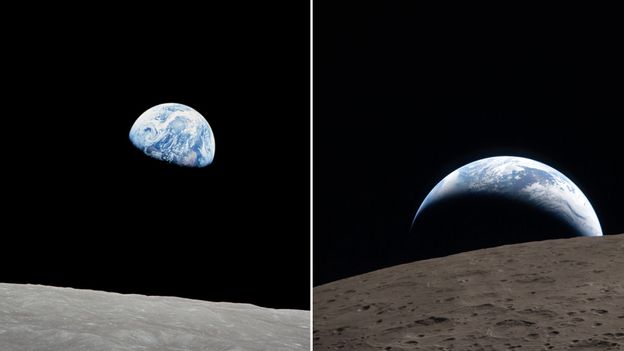
Apollo v Artemis: How the Earth changed in 58 years
"Although they're of different parts of the Earth, the one thing that does show up in both images, although you're looking at different parts of it, is Antarctica and the Southern Ocean," says Benjamin Wallis, a glaciologist at the University of Leeds in the UK. "The Antarctic Peninsula is one of the most rapidly warming parts of the Earth and 28,000km of ice shelf have collapsed in between the original image and the latest image."Studies suggest these changes in the ice around Antarctica are unprecedented in the last 10,000 years. Other areas of the Earth where water exists in a solid form – known as the cryosphere – have been similarly affected. "We really have seen some dramatic changes," says Petra Heil, director of science at the British Antarctic Survey. "We have now seen in both hemispheres a dramatic decrease in the seasonal sea ice cover, and in North America, Eurasia and Asia, we have seen much later seasonal snow cover, and we also see it melting earlier.""I think we are pretty confident based on the observations but also the numerical models to assign probably 90-95% of the change to human activities," Heil says.But while all this might make for grim reading, it's worth remembering that in 1968 – despite appearances from deep space – we had already caused damage to the planet.