Russian Regional Boss Orders Businesses to Find Army ‘Volunteers’ Among Employees
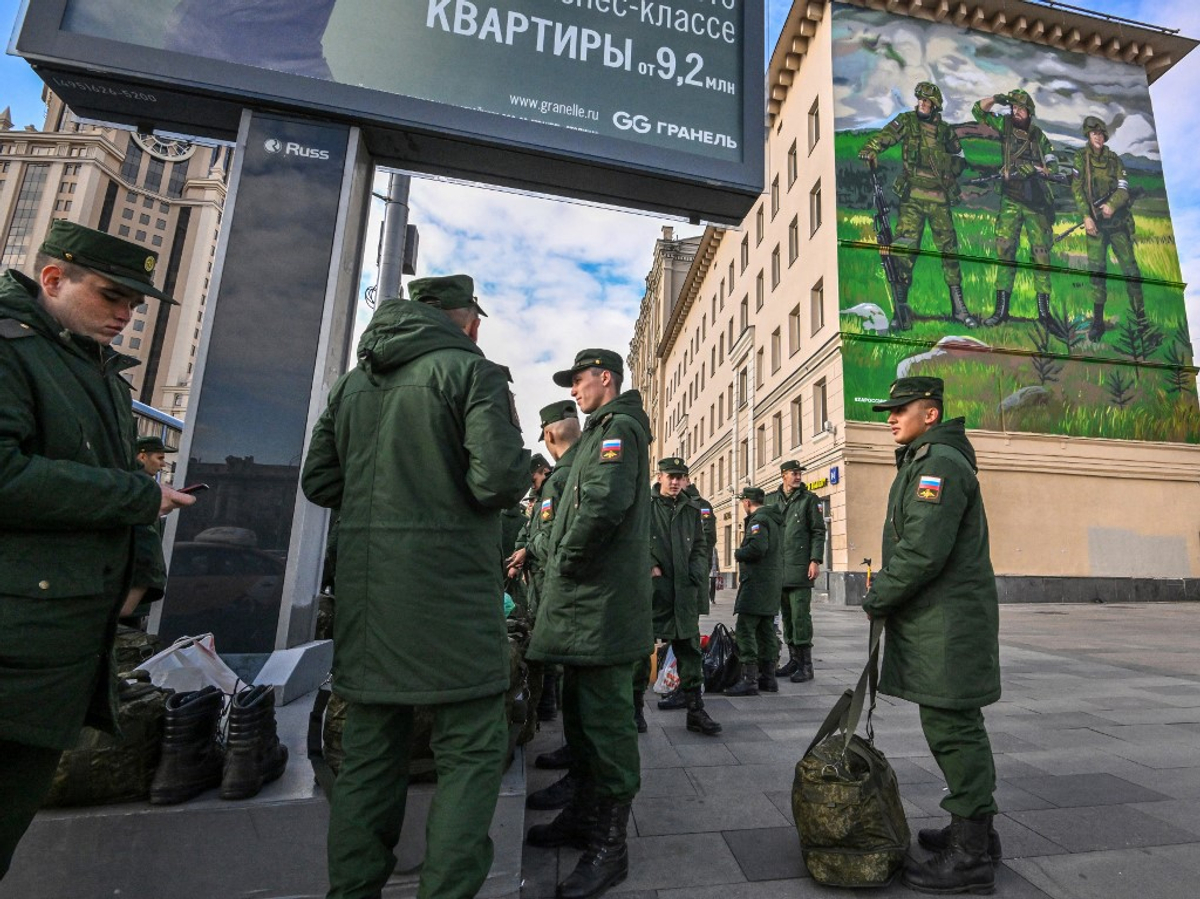
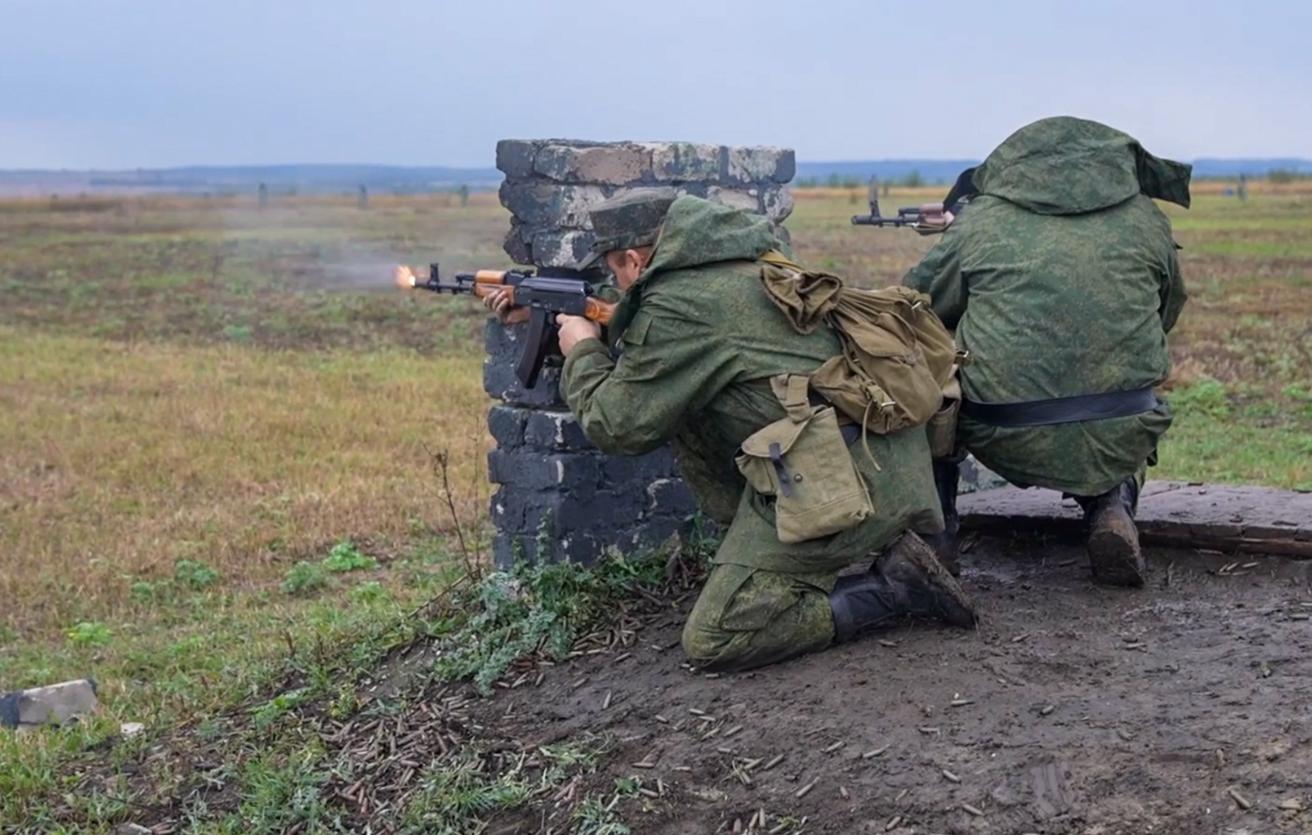
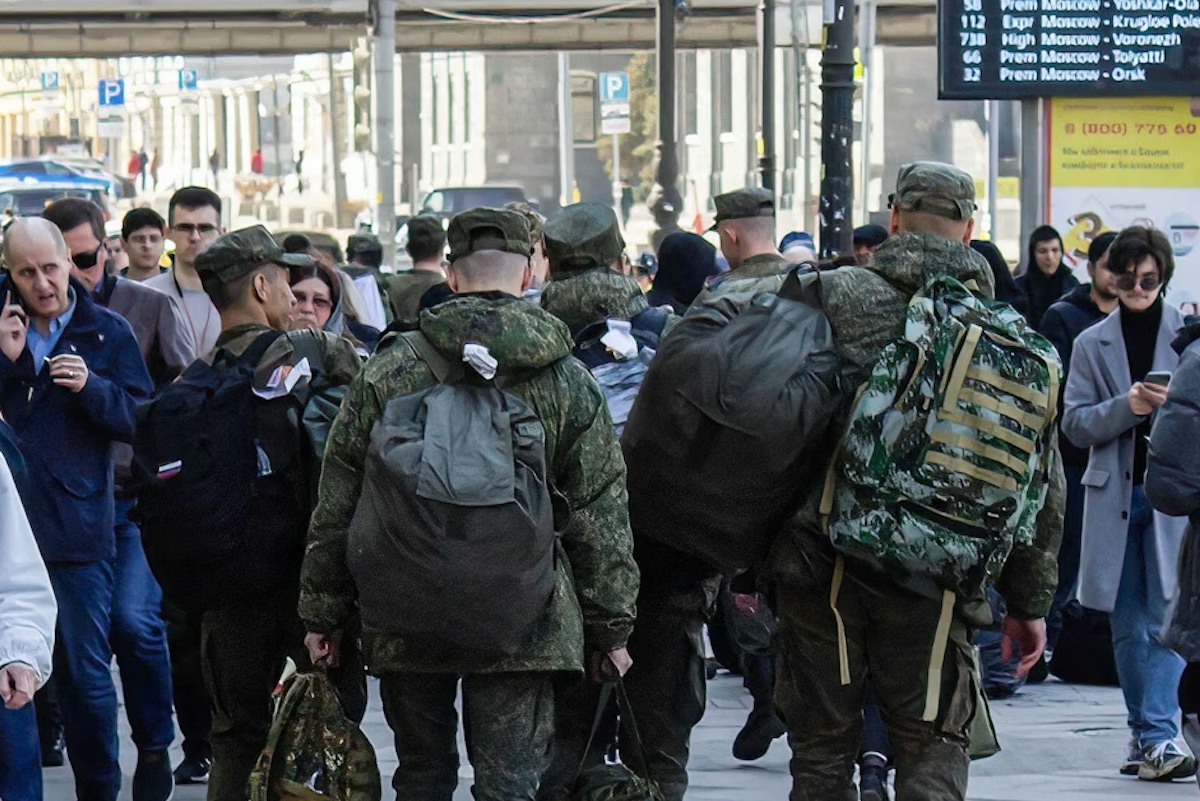
A top Kremlin-appointed official has set hard quotas for factory workers and office staff living in the industrial region in central Russia to “volunteer” for military service, according to a government decree made public by independent news platforms on Tuesday. The announcement published on state information platforms over the signature of Governor Pavel Malkov ordered directors of both government-run and private businesses in the Ryazan region to identify to army recruiters’ employees that would be suitable “candidates” for military service and to “convince” them to sign Russian army contracts.JOIN US ON TELEGRAMFollow our coverage of the war on the @Kyivpost_official. This image is a copy of an order signed by Ryazan governor Pavel Malkov on March 20 ordering all businesses in the central Russian region to find “volunteers” for military service and assigning mandatory recruitment quotas. (Image published by the independent Russian news agency SOTA on March 30). As written, the order applies to all organizations employing Ryazan region residents. Per mandatory quotas imposed by Malkov, a company with 150-300 employees must identify two “candidates” to army recruiters, with 300-500 employees, three candidates, and with more than 500 employees, five candidates.
Other Topics of Interest
Ukraine Calls on Israel to Vet Delivery of Stolen Ukrainian Grain
The shipment's ultimate destination remains unclear, raising questions about whether the cargo is intended for domestic consumption or onward distribution.
The order entitled: “Decree of the Governor of Ryazan Oblast from 20 March 2026 Number 17 ‘Regarding the compilation of candidates for military service by contract” (Russian: Постановление Губернатора Рязанской области от 20 марта 2026 года № 17-пг “О подборе кандидатов на военную службу по контракту) was effective immediately and would be personally managed by Malkov, it said. The independent Russian news agency SOTA said Malkov’s order was a tactic to implement under-the-radar conscription, because an open expansion of the draft and forced military service of citizens for combat in Ukraine is politically explosive across Russia, even in pro-government regions. A territory with some 1.1 million residents about 185 kilometers (115 miles) southeast of Moscow, Ryazan usually is accounted one of Russia’s more pro-government regions thanks to its relatively strong economy and a significant and longstanding military presence there, most notably the headquarters of Russia’s elite paratroop forces and a major base for Russian Air Force strategic bomber and long-range air transport units. Russian President Vladimir Putin named Malkov to the Ryazan region leadership in May 2022. Since then, Malkov has remained a steadfast supporter of Putin and the Kremlin’s invasion of Ukraine, implementing more than 100 local decrees expanding benefits for veterans and survivor families, and repeatedly calling on voters to make sacrifices for Russia’s war effort in Ukraine. “Everything related to the SVO [the Russian government-sanctioned term for the Russo-Ukraine War] is task number one. Assistance to the fighters and their loved ones, preservation of the memory of heroes – this is an absolute priority for us in all our work!” Malkov said in March 25 comments covered by state media. He went on to call for expanded state support for citizens who “stood up to defend the Motherland.” Regional laws in Ryazan may allow authorities to fine companies up to 1 million rubles ($12,200) for non-compliance with Malkov’s new recruitment quotas, the independent Moscow Times reported on Tuesday. A Wednesday analysis published by the independent research group Conflict Intelligence Team said that the legal grounds for the Ryazan decree lie in Presidential orders signed into effect by Putin in 2022, authorizing martial law-type measures in Russia, including mobilization of state agencies to improve army conscription figures. Other recent Russian state tactics to increase manpower flows into army recruitment centers have included official pressure on foreigners to sign up for military service in exchange for a Russian Federation residence permit (Belgorod region), massed screenings of military-aged men for individuals with incriminating police records that might incline them to join the army (Irkutsk region), and repeated visits by recruiters to a teacher’s college to drum up volunteers for drone units (Novgorod region), that report said. Former President Dmitry Medvedev, Deputy Chairman of the Russian Federation Security Council, in comments aired on March 27 by the state-run broadcaster RIA Novosti, assured citizens they are safe from conscription and denied the Russian army has a recruitment problem at all, saying in part: “Since the beginning of 2026, more than 80,000 people have signed a contract for military service…. At the present moment, there is absolutely no need to announce a new wave of mobilization. Those who have been recruited under contract are now sufficient to carry out combat tasks.” According to Ukrainian sources, Medvedev’s claims are not supported by battlefield evidence pointing to unmistakable heavy Russian battlefield casualties and a Russian state unable to find sufficient manpower to make up the losses. President Volodymyr Zelensky, in March 30 comments, citing Ukrainian intelligence sources, said Medvedev was playing fast and loose with official data and that in fact the Russian military manpower situation is worsening, telling Kyiv reporters: “I also [along with Medvedev] looked at their [Russian Federation] mobilization figures. They planned to mobilize 409,000 people for 2026, and as of March, they have reached only about 20-22% of that – roughly 80,000. They have lost more than they have mobilized. This is an important signal.” Kyrylo Sazanov, a Ukrainian military writer serving with 41st Mechanized Infantry Brigade, said, “A covert mobilization is beginning in Russia…The Kremlin finds itself in a difficult situation…So they resort to an old method, dating back to the Middle Ages or the days of serfdom. Everyone’s read about it. Companies receive orders to allocate a certain number of people for military service.” Most independent military analysts estimate the main cause of Russian army soldier shortages is 1-1.2 million casualties suffered in grinding warfare in Ukraine since 2022, among them 400,000-500,000 killed or seriously injured, which has reduced recruitment polls and Russian citizens’ public willingness to volunteer for military service. Concerns that the Kremlin might move to fill the gap by ordering a national draft to put men in uniform for war are widespread in Russia and have intensified because Russia’s once fast-paced operations in Ukraine have slowed to a bloody crawl. Russia’s ongoing spring offensive is likely to inflict increasingly heavy casualties on attacking forces, and its probable success is at least questionable, an independent analysis of current Russian operations said. “Russian advances have slowed as Ukrainian forces continue to contest the initiative in different frontline sectors for a protracted period….Battlefield realities as of late March 2026 continue to show that significant Russian battlefield gains, let alone total victory, are not imminent nor inevitable…Russian advances have significantly slowed as Russian forces continue to suffer personnel losses and increasingly rely on poorly trained and underequipped infantry to make gains,” the Washington D.C.-based Institute for the Study of War (ISW) said in a Wednesday analysis of Russian offensive operations.