Humiliation for Reeves as IMF slashes UK growth forecasts with biggest downgrade in G7 - and warns global recession is a 'close call'
Britain faces the biggest hit from the Iran war of the major developed nations, according to doom laden new projections from the International Monetary Fund.In a damning report, the global watchdog said it now expects the UK economy to grow by just 0.8 per cent this year as soaring energy prices batter households and businesses already straining under Labour’s tax hikes.The growth forecast is 0.5 percentage points lower than it anticipated in January – marking the biggest downgrade of any nation in the G7.The IMF also cut the outlook for next year by 0.2 percentage points to a feeble 1.3 per cent.And it warned that UK inflation will head towards 4 per cent while unemployment is set to reach 5.6 per cent.That would be the highest rate since early 2015 – outstripping the peak of 5.3 per cent seen during the Covid-19 pandemic.The IMF added that things could be even worse with a global recession ‘a close call’ if the war intensifies.The projections leave Labour’s vow to turn Britain into the fastest growing nation in the G7 in tatters and make a mockery of the Chancellor’s claims to have put the UK ‘in a stronger position because of the choices this government took to build economic stability'.
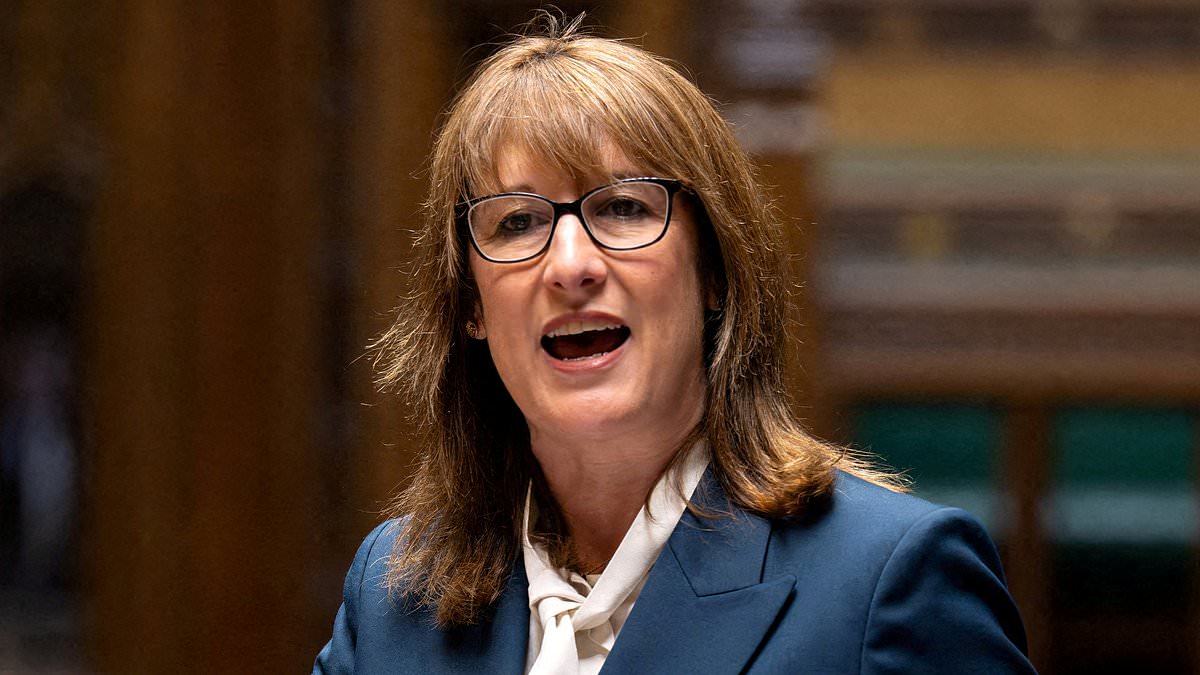
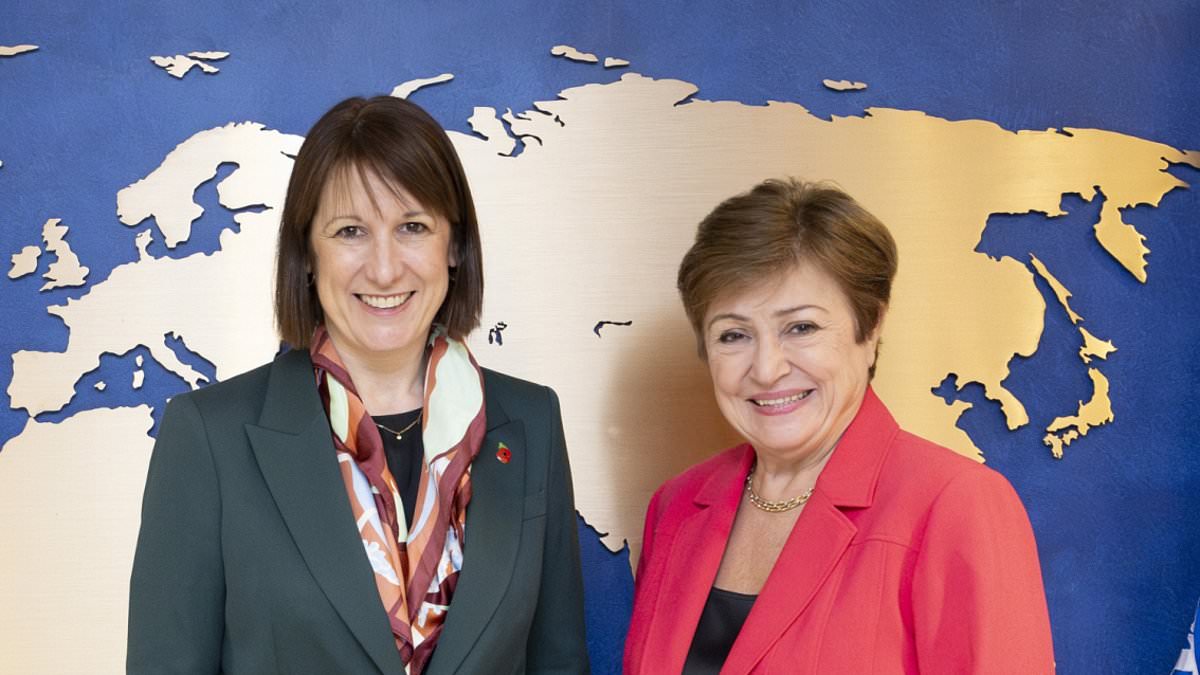
Chancellor Rachel Reeves (left) and IMF managing director Kristalina GeorgievaRachel Reeves, who is at the IMF’s spring meetings in Washington DC this week, insisted she has ‘the right plan for a more volatile world’ and called on others to follow her lead.But shadow chancellor Sir Mel Stride said: ‘Being handed the biggest downgrade in the G7 is a clear verdict on Rachel Reeves' choices - and she's got no one to blame but herself.‘The Chancellor hiked national insurance in her first Budget, doubling inflation and sending unemployment soaring. She is driving the hospitality industry out of business with business rates increases and planning the first hike in fuel duty in 15 years. Her plan to keep costs down has left us with the highest inflation in the G7, with businesses closing and the cost-of-living skyrocketing.‘The Conservatives urge international partners to see Rachel Reeves as a cautionary tale of what happens when a politician has no clue what they're doing and chooses to hammer business relentlessly.’Thomas Pugh, chief economist at consulting firm RSM UK, said ‘stagflation looks like the best-case scenario of the UK' – a painful combination of rising prices and weak economic growth.He added: ‘It's now looking inevitable that the UK is in for another bout of stagflation. But the risks of a recession are clearly rising.’ Global uncertainty has increased sharply this year, according to the IMF report Geopolitical risks are also on the riseIn its latest World Economic Outlook, published today in Washington, the IMF downgraded its forecasts for global growth this year by 0.2 percentage points to 3.1 per cent.‘Once again, the global economy is threatened with being thrown off course, this time by the outbreak of war in the Middle East,’ it said.While the downgrade to Britain’s growth forecasts was the biggest of any G7 nation, the UK is expected to outpace Italy and Japan this year with the same rate of expansion as forecast for Germany.However, the UK will lag behind Donald Trump’s America as well as Canada and France.The IMF said these forecasts are ‘predicated on the assumption that the war will have limited duration, intensity, and scope, such that the disruptions will fade by mid-2026’.But it warned the outlook would be bleaker in the event of a wider or prolonged conflict.‘The global economic impact will crucially depend on the conflict’s duration, intensity, and scope, which are inherently unpredictable,’ the IMF said.‘Geopolitical tensions could worsen even more than they already have – turning the situation into the largest energy crisis in modern times – or domestic political strains could erupt.’The IMF said a global recession – when output rises by less than 2 per cent – was a ‘close call’ in a more severe scenario that included a fresh surge in the oil price.Global growth would be reduced by 1.3 percentage points this year to just 1.8 per cent.‘This would mean a close call for a global recession (growth rate below 2 per cent), which has happened only four times since 1980, with the latest two occasions corresponding to the global financial crisis and the Covid-19 pandemic,’ according to the report.The Fund said the war in the Middle East presents a serious challenge with an impact on ‘commodity markets, inflationary projections and financial conditions’.It warns that fiscal policy is ‘too loose in many advanced countries’ - putting additional pressure on public finances at a time when military spending is being ramped up.IMF economic counsellor Pierre-Olivier Gourinchas said the global outlook has ‘abruptly darkened’.He added: ‘The closure of the Strait of Hormuz and serious damage to critical production facilities in a region central to global hydrocarbon supply could cause an energy crisis on an unprecedented scale.’ The IMF warns a global recession is a 'close call' under a 'severe scenario' as inflation soarsThe report, the most authoritative projection for global prospects, singles out Britain for special mention amid the fallout from the Gulf war because of our dependence on foreign energy.The war will have a ‘large negative effect in some energy importing countries’ such as the UK, it said.The words will pile pressure on Prime Minister Keir Starmer to reverse the ban on new drilling in the North Sea and refusal to back enhanced gas storage facilities at Rough off the Yorkshire coast.The IMF warned the inflation surge will prevent the Bank of England from cutting interest rates by as much as expected before the broke out.It was thought the Bank could cut rates two or three times this year – taking them as low as 3 per cent.But with inflation set to soar further away from the 2 per cent target, investors are now betting on one or possible two rate hikes this year.Two hikes would take rates from the current level of 3.75 per cent to 4.25 per cent – pushing up the cost of mortgages for millions of families.‘In the United Kingdom, the war and a slower pace of monetary easing mean that growth is projected to decline from 1.3 per cent in 2025 to 0.8 per cent in 2026, a downward revision of 0.5 percentage points,’ the IMF said.‘Growth is projected to recover to 1.3 per cent in 2027, slower than expected before the war as the impact of higher energy prices linger.’The report added: ‘In the United Kingdom, inflation, which in 2025 increased partly because of one-off changes in regulated prices, is expected to pick up again temporarily toward 4 per cent before returning to target by the end of 2027 as the effects of higher energy prices fade and a weakening labour market continues to exert downward pressure on wage growth.’Ms Reeves said: ‘The war in Iran is not our war, but it will come at a cost to the UK. These are not costs I wanted, but they are costs we will have to respond to. I have vowed that my economic approach to this crisis will be both responsive to a changing world and responsible in the national interest, keeping inflation and interest rates in check to protect households and businesses.‘We entered this conflict in a stronger position because of the choices this government took to build economic stability, but there is more to do. That is why we are strengthening Britain’s energy security, backing British industry and protecting households, to build a Britain that is stronger, more resilient, and prepared for the future.’Susannah Streeter, chief investment strategist at Wealth Club, said: 'The IMF downgrade is a fresh blow to Chancellor Rachel Reeves and the government's elusive search for growth.'The UK is set to be battered by hot oil prices, an energy bill crisis and a tightening of consumer spending.'The economy was already flatlining even before war erupted in the Middle East, and now there is little means of resuscitation available given that interest rates look set to ramp up to curb inflation.'One to two interest rate increases are now being priced into financial markets instead of the scary three to even four hikes temporarily forecast, but it's still going to be tough going ahead if borrowing costs rise further.'AJ BellAJ BellEasy investing and ready-made portfoliosHargreaves LansdownHargreaves LansdownFree fund dealing and investment ideasinteractive investorinteractive investorFlat-fee investing from £4.99 per monthFreetradeFreetradeInvesting Isa now free on basic planTrading 212Trading 212Free share dealing and no account feeAffiliate links: If you take out a product This is Money may earn a commission. These deals are chosen by our editorial team, as we think they are worth highlighting. This does not affect our editorial independence.Compare the best investing account for you