


Walking into a dance shoe shop can feel overwhelming when every pair looks similar but behaves differently on the floor. Heel height, sole material, and fit are the three decisions that shape how a shoe performs, yet many dancers buy on appearance alone and discover the consequences weeks later. Suphini has spent years helping dancers navigate these choices, and this guide distills that experience into practical advice you can use before spending your money.
Starting With How You Actually Dance
Before comparing specifications, take an honest look at your own dancing habits. How many hours a week do you spend on the floor? Do you compete, or do you dance socially? Are you working on waltz and foxtrot, or do you also spend time on Latin styles that demand different footwear? Beginners often need stability and cushioning, while advanced competitors need precision and presentation. Suphini's range covers this spectrum, but the right starting point is always a clear picture of your own needs. A shoe that suits a championship competitor may frustrate a newcomer, and a beginner's shoe may hold back an experienced dancer. Match the purchase to the dancer you are today, not the dancer you hope to become next season.

Heel Height: Finding Your Balance Point
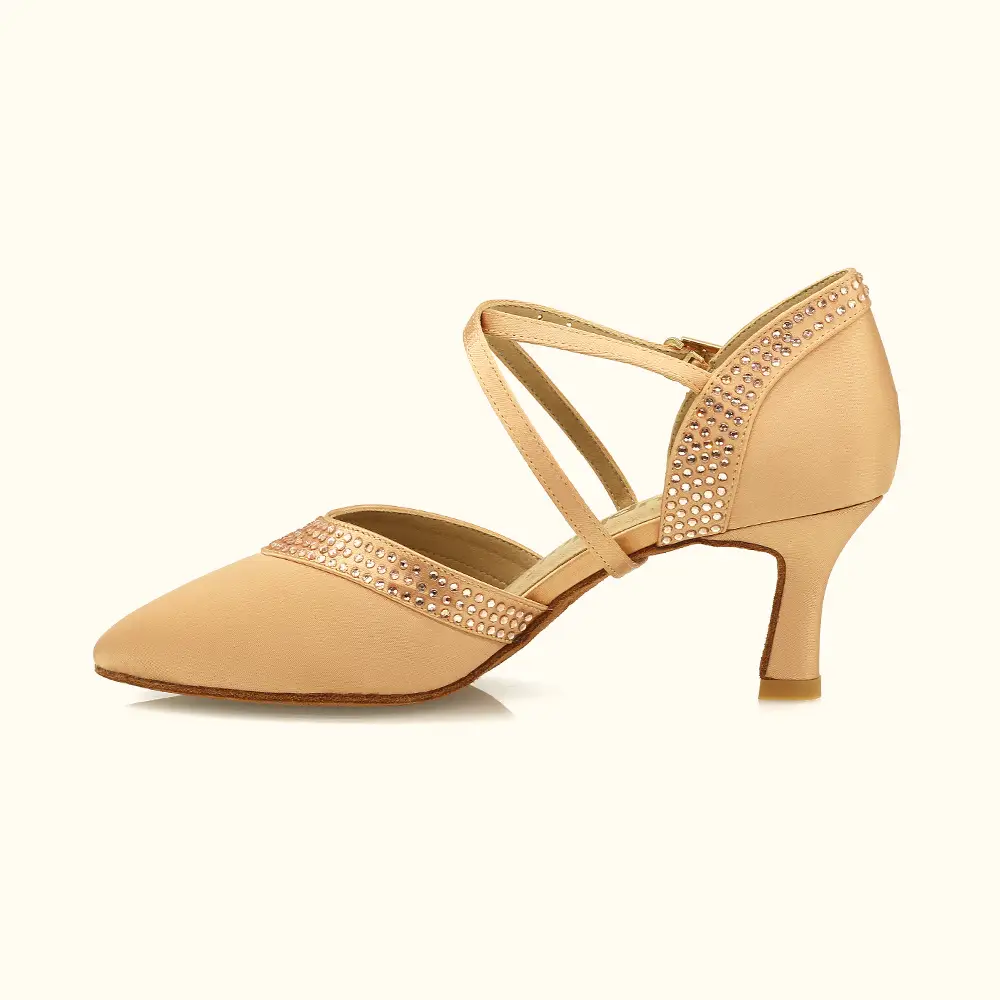
Heel height is the most visible variable in standard dance shoes, and it affects both posture and stability. Lower heels of around one and a half to two inches give beginners a broader base and reduce strain while balance develops. As technique improves, many dancers move to taller heels of two to two and a half inches, which create a longer leg line and encourage the forward weight placement that standard dancing rewards. Suphini advises dancers to choose the tallest heel they can control comfortably for a full lesson, not the tallest they can stand in for a photograph. A heel you cannot manage will undermine your balance, no matter how elegant it looks under a gown.
Sole Type: Suede, Sole Thickness, and Floor Feel
The sole determines how your shoe interacts with the floor, and suede remains the standard for good reason. Genuine suede provides a consistent, controlled glide that lets dancers travel smoothly without slipping or sticking. Suphini uses quality suede with a dense nap that resists flattening, so the shoe keeps its slip characteristics through months of use. Sole thickness matters too, since a thinner sole gives more feel for the floor while a thicker one offers slightly more cushioning for tired feet. Dancers who practice on varied surfaces sometimes keep a second pair with a different sole finish, but for most, a well-made suede sole covers nearly every situation a standard dancer encounters.
Fit Fundamentals: Length, Width, and Instep
Fit is where many dance shoe purchases go wrong, and Suphini's guidance emphasizes three measurements. Length should leave your toes close to the front of the shoe without pressing against it, accounting for the slight swelling that comes with dancing. Width must accommodate the ball of the foot without pinching, since a narrow shoe causes cramping within minutes. The instep deserves equal attention, because a strap or upper that cuts into a high instep will make every rise painful. Try shoes late in the day, wear the tights or thin socks you dance in, and walk and pivot in the shop rather than simply standing. A shoe that feels merely acceptable at purchase will feel worse after an hour of dancing.
Matching Shoe Style to Your Dance Schedule
Your weekly schedule should influence the style you choose as much as your skill level does. Dancers who practice five days a week benefit from a durable leather practice shoe with a moderate heel, reserving satin competition models for lessons and events. Social dancers who attend balls and parties may prefer a versatile satin shoe that presents well without demanding competition-level precision. Competitors preparing for events should invest in a dedicated competition pair fitted precisely and broken in well before the date. Suphini's collection includes options for each of these patterns, and the most satisfied dancers are usually those who buy for their actual schedule rather than an aspirational one.
Budgeting for Quality Without Overspending
Dance shoes range widely in price, and the cheapest pair is rarely the best value. A well-constructed shoe that fits properly will last through many months of regular dancing, while a bargain that pinches or wears out quickly costs more in replacements and lost practice time. Suphini suggests prioritizing fit and sole quality above decorative details, since these are the elements that affect comfort and performance. Dancers on a tight budget can start with a single versatile pair and add a second once their needs become clearer. Watching for studio discounts and buying at the right time of year can stretch a budget without compromising on the fundamentals that matter.
Trying Before You Commit
No guide can substitute for trying shoes on your own feet, ideally on a dance floor rather than a carpeted shop. Suphini encourages dancers to test several models in one session, comparing heel heights and sole types side by side while performing the steps they actually dance. Ask about return policies before buying, and take advantage of any trial period to wear the shoes at home for short sessions. Note how your feet feel the next morning as well as during the trial, since problems often surface after the shoes have been worn for a while. Patience at this stage pays off in a purchase you will be happy with for a long time.
Comments (0)