


As cities grow and e-commerce demand increases, businesses face new challenges in delivering packages quickly, efficiently, and sustainably. Traffic congestion, rising transportation costs, and customer expectations for faster deliveries have encouraged logistics providers to explore smarter technologies. Autonomous Last-Mile Delivery is emerging as a promising approach to address these challenges and improve the way businesses move goods from distribution centers to customers.
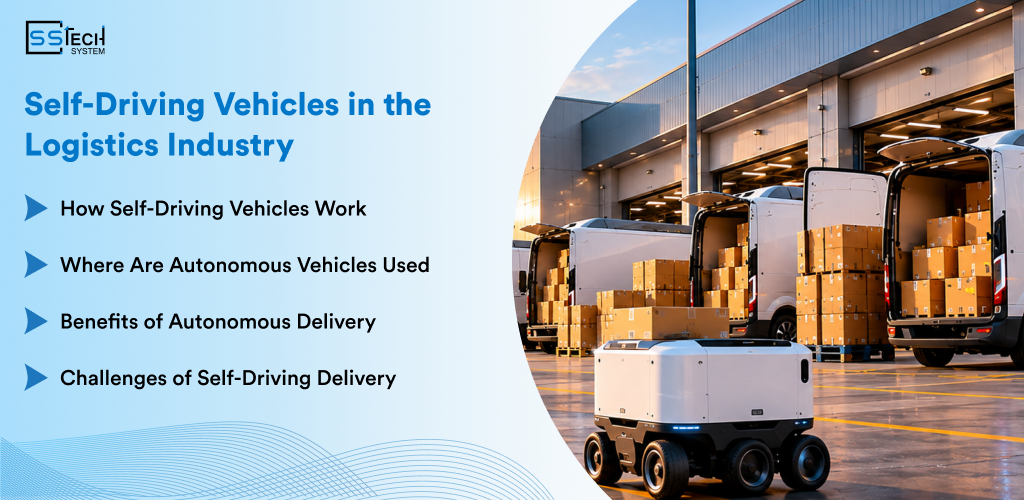
Smart cities combine digital infrastructure, connected devices, artificial intelligence, and intelligent transportation systems to improve urban life. Within this environment, autonomous delivery robots, drones, and self-driving vehicles can help businesses improve delivery efficiency and support more flexible logistics operations.
What Is Autonomous Last-Mile Delivery?
Autonomous last-mile delivery uses technologies such as artificial intelligence, robotics, GPS, sensors, and automated navigation to transport packages from a local distribution hub to their final destination. Depending on the application, businesses can use delivery robots, aerial drones, or autonomous vehicles to complete specific delivery tasks with limited or no direct human control during operation.
Traditional delivery systems often depend on drivers navigating congested roads and managing multiple stops manually. Autonomous systems can support these operations by analyzing routes, detecting obstacles, monitoring vehicle conditions, and responding to changing delivery requirements.
How Smart Cities Are Accelerating Autonomous Delivery
Smart cities create an environment where connected infrastructure and digital services can support automated transportation. Several developments are helping autonomous delivery technologies move toward broader adoption.
1. Connected Urban Infrastructure
Smart traffic signals, digital maps, road sensors, and connected transportation systems can provide useful information about traffic conditions and road accessibility. Autonomous delivery systems can use available data to plan routes and respond to changing conditions.
However, these capabilities depend on reliable infrastructure, accurate data, and integration with compatible systems.
2. Artificial Intelligence and Intelligent Route Planning
Artificial intelligence plays an important role in autonomous delivery operations. AI-powered systems can analyze traffic patterns, delivery locations, package priorities, and vehicle availability to recommend efficient routes.
Intelligent route planning can help logistics teams reduce unnecessary travel, manage delivery schedules, and improve resource utilization. When autonomous vehicles operate alongside traditional delivery fleets, centralized software can coordinate different delivery methods through a shared operational platform.
3. Internet of Things and Real-Time Monitoring
Internet of Things (IoT) devices connect vehicles, sensors, tracking systems, and logistics platforms. These devices can provide information about vehicle location, battery status, package conditions, and delivery progress.
Real-time visibility also helps businesses provide customers with more accurate delivery updates and improve communication throughout the delivery process.
Key Technologies Shaping Autonomous Last-Mile Delivery
Several technologies are working together to make autonomous delivery more practical for smart cities.
Delivery Robots and Autonomous Ground Vehicles
Ground delivery robots can support short-distance deliveries across suitable sidewalks, campuses, residential communities, and controlled urban environments. Depending on their design and operating conditions, these robots can transport groceries, parcels, meals, and other small items.
Autonomous ground vehicles can also support deliveries along mapped routes. Businesses must evaluate vehicle capacity, road conditions, safety requirements, and local regulations before deploying these systems.
Delivery Drones
Drones can transport lightweight packages through the air and may reduce dependence on road networks for certain deliveries. They can be useful in selected areas where flight operations, weather conditions, package weight, and regulations allow safe deployment.
Although drones offer potential advantages, noise restrictions, airspace requirements, battery limitations, and landing arrangements can affect their practical use.
Cloud-Based Logistics Platforms
Cloud-based logistics platforms provide a central location for managing orders, routes, fleets, and delivery information. They can connect autonomous vehicles with warehouse systems, customer applications, and traditional delivery operations.
Businesses can use these platforms to monitor delivery performance, coordinate resources, and review operational data. A well-integrated platform also helps organizations expand their delivery capabilities without managing every technology through a separate system.
Benefits of Autonomous Last-Mile Delivery for Smart Cities
Improved Delivery Efficiency
Autonomous delivery systems can automate selected transportation tasks and reduce the manual effort required for repetitive deliveries. When businesses combine automation with intelligent scheduling, they can improve route planning and manage delivery capacity more effectively.
Better Customer Experience
Modern customers expect transparent tracking, convenient delivery options, and reliable estimated arrival times. Autonomous delivery platforms can support these expectations by sharing real-time updates and automating delivery notifications.
Businesses can also explore secure delivery lockers, designated collection points, and controlled handoff procedures to make package collection more convenient.
Potential Cost Optimization
Labor, fuel, vehicle maintenance, and inefficient routing can increase last-mile delivery expenses. Autonomous technologies may help reduce selected operating costs by automating suitable tasks and improving resource utilization.
However, businesses must consider the costs of hardware, software integration, maintenance, insurance, charging infrastructure, and regulatory compliance. A carefully planned implementation helps organizations evaluate the long-term business case.
Support for Sustainable Urban Logistics
Electric delivery robots and vehicles can reduce direct tailpipe emissions compared with conventional fuel-powered vehicles. More efficient route planning may also reduce unnecessary travel.
The overall environmental impact depends on electricity sources, vehicle manufacturing, battery production, delivery demand, and whether autonomous systems replace or add to existing vehicle trips.
Challenges Businesses Must Address
Despite its potential, autonomous delivery still faces several challenges that businesses and city authorities must address before scaling operations.
Safety and regulatory compliance: Autonomous systems must operate within applicable transportation, aviation, pedestrian safety, and privacy requirements. Businesses should review local regulations before selecting deployment locations.
Infrastructure limitations: Not every neighborhood has suitable roads, sidewalks, charging facilities, connectivity, or designated delivery areas. Companies must assess local conditions before introducing autonomous vehicles.
Technology integration: Autonomous delivery systems need to communicate with order management platforms, warehouse management systems, fleet management tools, and customer applications. Poor integration can create operational delays and unreliable information.
Security and privacy: Connected vehicles and delivery platforms may process location, customer, and operational data. Businesses need appropriate access controls, secure communications, data protection measures, and monitoring procedures.
Public acceptance: Residents may have concerns about pedestrian safety, sidewalk accessibility, noise, and unattended packages. Clear communication, responsible deployment, and accessible customer support can help build public confidence.
How Businesses Can Prepare for the Future
Businesses do not need to automate every delivery operation at once. A phased strategy allows organizations to evaluate the technology and understand its practical value.
First, identify delivery routes and locations that are suitable for automation. Short-distance, repetitive deliveries within controlled environments may provide a useful starting point.
Next, evaluate the existing logistics technology stack. Companies should determine whether their current systems can integrate with autonomous vehicles, GPS tracking, route optimization tools, and real-time reporting platforms.
A pilot program can then measure delivery times, successful handoffs, operational expenses, customer satisfaction, and safety performance. These results can help decision-makers determine whether expansion makes business sense.
Finally, choose technology partners that understand software integration, logistics workflows, security, and long-term maintenance. Flexible software architecture can help businesses adapt as autonomous technologies and smart-city infrastructure continue to evolve.
The Role of Custom Software in Autonomous Delivery
Autonomous vehicles alone cannot manage the entire delivery process. Businesses also need software that connects orders, warehouses, drivers, vehicles, routes, and customers.
Custom logistics software can support automated dispatch, delivery tracking, fleet monitoring, route optimization, and operational reporting. Integration with existing business systems helps organizations coordinate autonomous and conventional delivery methods through a more unified workflow.
Technology providers such as SSTech System can help businesses explore software development approaches for modern logistics operations. By aligning software capabilities with specific operational requirements, businesses can build a foundation for integrating emerging technologies as their needs develop.
Conclusion
The future of Autonomous Last-Mile Delivery will depend on how effectively businesses combine robotics, AI, IoT, connected infrastructure, and logistics software. Smart cities can create new opportunities for automated delivery by improving digital connectivity and supporting more coordinated urban transportation.
Although challenges involving safety, regulation, integration, and cost remain, a measured approach can help logistics providers identify practical opportunities for automation. Businesses that invest in adaptable technology, reliable data, and customer-focused delivery processes will be better positioned to respond to changing market expectations.
As smart cities continue to develop, advanced Last-mile Delivery Solutions will play an important role in building more connected, efficient, and potentially sustainable urban supply chains.
Comments (0)