


Every manufacturer reaches a point where they must decide whether to keep producing laundry pods by hand or invest in automated equipment. For small batches and early experiments, manual methods can seem appealing because they require little upfront investment. But as demand grows and quality expectations rise, the limitations of hand production become impossible to ignore. POLYVA laundry pod machines represent the automated end of the spectrum, and comparing them directly against manual approaches reveals some eye-opening differences. This article breaks down the comparison across the three dimensions that matter most to any producer: cost, speed, and quality.
Understanding What Manual Production Really Involves
Manual pod production is exactly what it sounds like. Operators measure detergent by hand, place film into trays or molds, fill each cavity using jugs or syringes, and seal the pods with heat irons or small presses. In some small workshops, this process is repeated hundreds of times a day by teams of workers. It is labor-intensive, physically demanding, and entirely dependent on human attention to detail. While this approach can work for artisan or test-market quantities, it struggles to maintain consistency once volume increases. Understanding these constraints is the first step in evaluating whether automation makes sense for your operation.

The True Cost of Manual Production Over Time
On paper, manual production looks cheap because there is no machine to purchase. In reality, the costs accumulate quietly and steadily. Wages for multiple operators, ongoing training, rejected batches, wasted film, and spilled detergent all add up. Add in the cost of slower order fulfillment and the occasional unhappy customer, and the picture becomes less attractive. A POLYVA machine requires a significant initial investment, but it replaces several workers with one or two operators and dramatically reduces material waste. When you calculate total cost of ownership over two or three years, the automated route often comes out ahead, especially for producers with steady or growing order volumes.
Speed Differences That Affect Your Bottom Line
Speed is where the gap between manual and automated production becomes dramatic. A skilled worker using manual methods might produce a few hundred pods in an hour under ideal conditions. A POLYVA laundry pod machine can produce thousands in the same timeframe, running continuously with minimal interruption. This difference matters because faster production means faster order fulfillment, which in turn means happier distributors and retailers. It also means you can accept larger contracts without worrying about whether your team can keep up. In competitive markets, the ability to scale quickly is often the difference between winning a major account and losing it to a faster competitor.
Quality Consistency and Leak-Proof Reliability
Quality is the area where manual methods struggle most. Human hands cannot maintain the same sealing pressure or fill volume for hours on end. Small variations creep in, and those variations lead to leaks, uneven pods, and inconsistent dissolution in the wash. A single leaky pod in a package can generate a customer complaint and a return. POLYVA machines eliminate this variability by controlling temperature, pressure, and dosing with mechanical precision. Every pod that comes off the line meets the same specifications, which builds brand trust and reduces the costly cycle of refunds and replacements.
Labor Challenges and Workforce Considerations
Finding reliable workers for repetitive manual tasks is becoming harder in many regions. Turnover is high, training takes time, and absenteeism can halt production entirely when only a few people know how to make the pods. Automation reduces this dependency. A POLYVA machine needs a small team of trained operators rather than a large crew of manual laborers. This shift not only stabilizes production but also frees up your workforce for higher-value tasks like quality oversight, packaging, and customer service. For many manufacturers, this alone justifies the switch.
Scalability and Long-Term Growth Potential
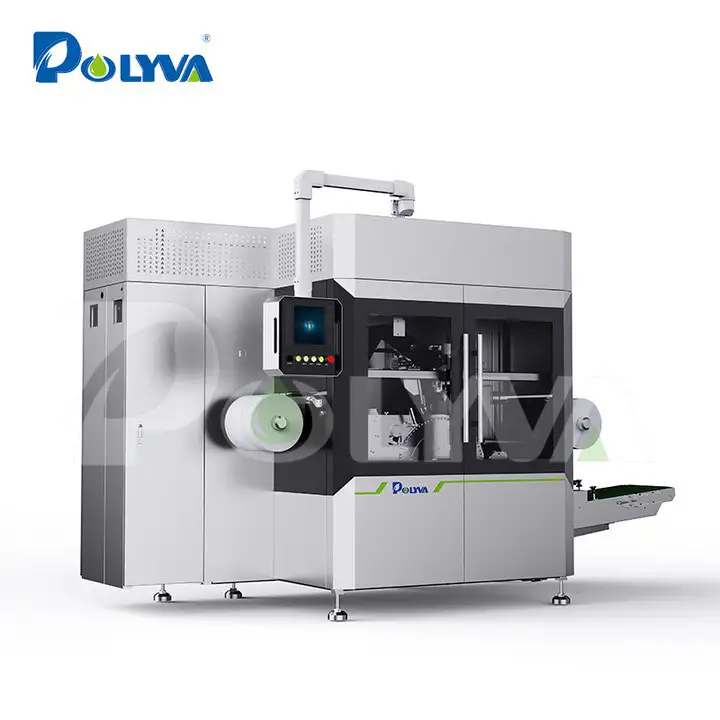
Manual production has a natural ceiling. No matter how many workers you hire, there is a limit to how many pods a hand-filling operation can produce in a day. POLYVA machines are built to scale, with models that can be upgraded or supplemented as your business grows. You can add lanes, increase speed settings, or integrate with automated packaging lines. This scalability means you are not constantly rebuilding your production process from scratch every time demand increases. Instead, your equipment grows with you, protecting your investment and keeping your operation efficient.
Making the Right Choice for Your Business
There is no single answer that fits every manufacturer. Very small producers with niche markets may find manual methods adequate for their needs. But for anyone with ambitions to grow, automate, and compete on a larger stage, the comparison clearly favors a POLYVA laundry pod machine. The cost savings, speed advantages, and quality consistency combine to create a production capability that manual methods simply cannot match. The decision ultimately comes down to where you see your business in three to five years, and whether your current methods can take you there.
Comments (0)