


The DevOps industry continues to expand as organizations adopt cloud computing, automation, and modern software development practices. This growth has created numerous opportunities for professionals with DevOps skills, but competition for jobs remains high. Many candidates with strong technical backgrounds still struggle to receive interview calls because their resumes do not effectively present their knowledge and experience. A resume DevOps Online Course must clearly communicate technical skills, project experience, and professional achievements to capture recruiter attention. Avoiding common resume mistakes can help DevOps candidates build a stronger profile and improve their chances of getting shortlisted.
Not Clearly Presenting DevOps Technical Skills
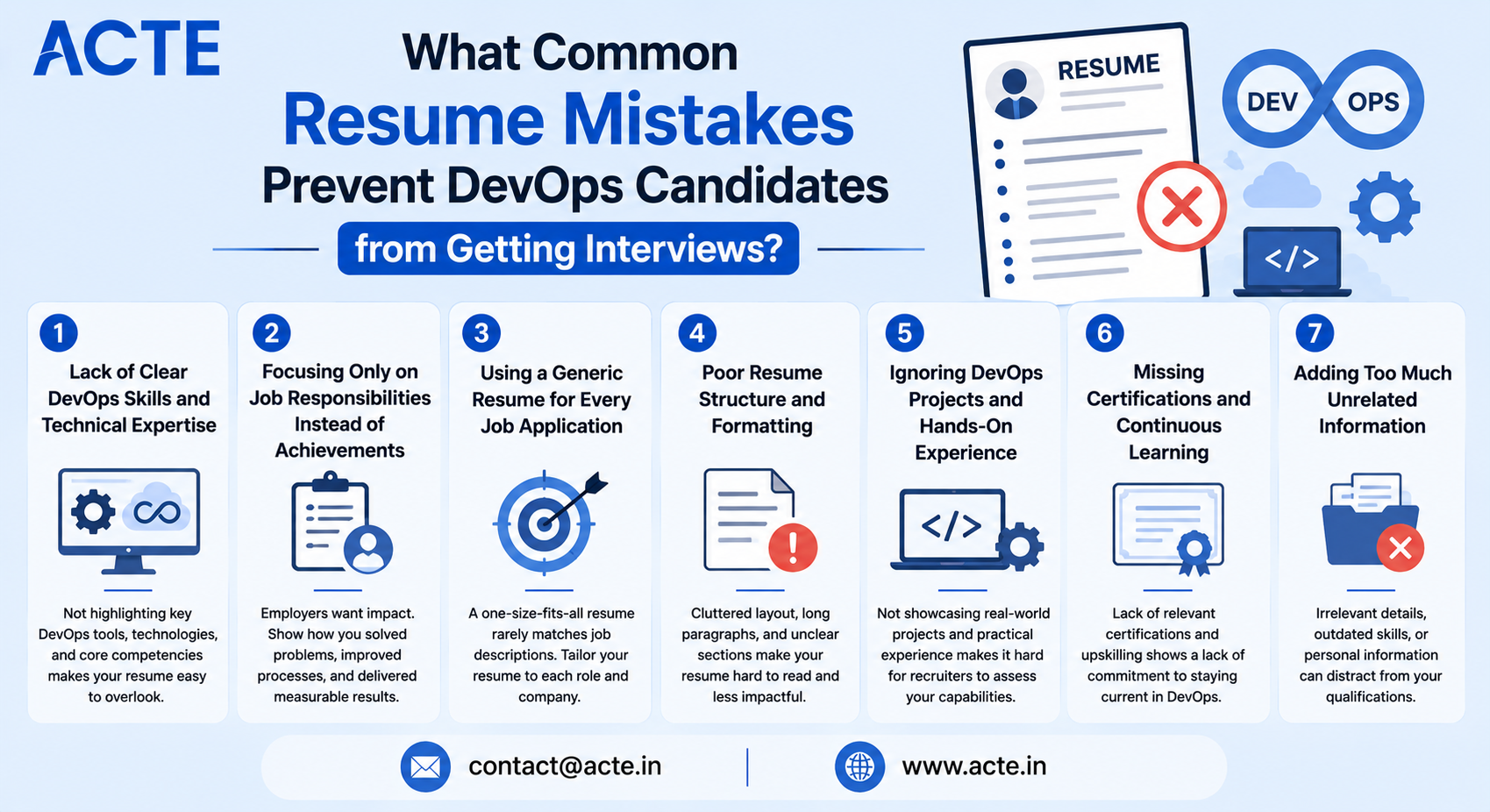
A major mistake many candidates make is failing to highlight their technical skills in a clear and organized manner. DevOps recruiters often look for expertise in specific technologies that match their requirements. If important skills are hidden within lengthy descriptions, recruiters may overlook them. Candidates should clearly showcase their knowledge of cloud platforms, automation tools, container technologies, scripting languages, and monitoring solutions. Mentioning skills such as AWS, Azure, Docker, Kubernetes, Jenkins, Terraform, Git, Ansible, and Linux in a structured format makes the resume more effective.
Focusing Only on Job Duties
Many DevOps resumes describe responsibilities but fail to explain the impact of the candidate’s work. Simply mentioning activities like managing servers, supporting deployments, or monitoring applications does not help candidates stand out. Employers want to understand how a professional improved processes and delivered results. Candidates should highlight achievements such as automating workflows, reducing deployment time, improving system reliability, increasing application performance, or lowering operational challenges. Achievement-focused resumes create a stronger impression than resumes that only list daily tasks.
Not Adjusting the Resume for Different Roles
Submitting the same resume for every DevOps position is another mistake that can reduce interview opportunities. Each organization may require different skills depending on its infrastructure, tools, and business objectives. Some companies may focus on cloud engineering, while others may prioritize CI/CD automation, Kubernetes management, or infrastructure security. Customizing the resume according to the job description helps candidates highlight relevant experience and increases their chances of matching recruiter expectations.
Failing to Include Hands-On Projects
DevOps is a practical field where real-world experience plays an important role in hiring decisions. Many candidates mention certifications and technical knowledge but fail to include projects that demonstrate their abilities. Adding details about projects involving cloud deployment, CI/CD pipeline creation, DevOps Course in Chennai container management, automation scripts, infrastructure provisioning, and monitoring solutions can strengthen a resume. Practical project experience shows recruiters that candidates can apply DevOps concepts to solve real technical challenges.
Creating a Poorly Structured Resume
A confusing resume layout can prevent recruiters from identifying important information quickly. Long paragraphs, inconsistent formatting, unclear sections, and unnecessary details can make even qualified candidates appear less suitable. A professional DevOps resume should include sections such as professional summary, DevOps Course in Bangalore technical skills, work experience, projects, certifications, and education. A clean and organized structure improves readability and helps recruiters understand the candidate’s qualifications more effectively.
Ignoring Certifications and Continuous Learning
DevOps technologies are constantly changing, making continuous learning essential for career growth. Candidates who fail to mention certifications, training programs, or recent technical learning may lose opportunities to stand out. Certifications related to cloud platforms, automation, Kubernetes, and DevOps practices can add credibility to a resume. Demonstrating ongoing skill development shows employers that candidates are prepared to adapt to changing technology requirements.
Adding Unnecessary Information
Including irrelevant details can reduce the effectiveness of a DevOps resume. Some candidates add outdated technologies, unrelated experiences, or excessive information that DevOps Course in Hyderabad does not support their career goals. A strong resume should focus on relevant technical skills, project contributions, certifications, and professional achievements. Keeping the content targeted helps recruiters quickly identify the candidate’s strengths and suitability for the role.
Conclusion
A well-prepared DevOps resume can significantly improve a candidate’s chances of securing interview opportunities. Mistakes such as unclear skill presentation, lack of achievements, missing project details, poor formatting, and generic content can prevent qualified professionals from getting noticed. By creating a focused, customized, and achievement-driven resume, DevOps candidates can effectively showcase their expertise, attract recruiter attention, and increase their chances of building a successful career in the technology industry.
Comments (0)