


Industrial facilities, construction sites as well as municipal operations encounter diverse water contamination challenges daily. Contamination sources range from geological sediment to industrial discharge residues. Multiple contaminant types often exist simultaneously in untreated water streams. Regulatory agencies mandate removal of specific substances before discharge into natural water bodies or environmental release. Failure to address contamination creates compliance violations as well as environmental liability exposure.
Comprehensive Removal Capabilities Available
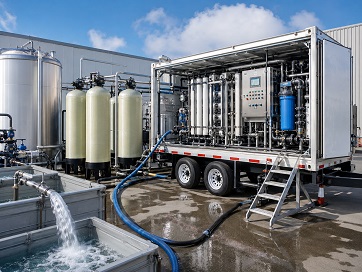
Temporary treatment systems address multiple contamination categories through integrated technological solutions. Single treatment platforms handle sediment, chemicals, biological material, and dissolved substances concurrently. Advanced filtration mechanisms work progressively to remove contaminants at different stages. Comprehensive approach ensures compliance with discharge standards regardless of contamination complexity. Upgrade your water quality: explore our water treatment rental options and ensure clean, safe water - visit now!
Suspended Solids and Sediment Removal
Coagulation & flocculation processes neutralize particle charges and enable aggregation into larger, settleable masses. Settling tanks separate these aggregated particles through gravity-based mechanisms. Multimedia filtration stages capture remaining fine particles that resist settling. Multi-stage approach removes suspended solids exceeding 99% efficiency in treated water output.
Heavy Metals and Chemical Extraction
Adsorption systems utilizing specialized media capture dissolved metallic compounds effectively. Ion exchange resins selectively remove targeted heavy metal ions from water streams. Chemical precipitation transforms dissolved metals into solid phases for removal through subsequent filtration. Treatment effectiveness addresses regulatory limits for lead, cadmium, chromium along with other regulated substances.
Organic Compounds and Dissolved Solids
Activated carbon filtration removes organic contaminants including pesticides along with volatile organic compounds. Reverse osmosis membranes separate dissolved mineral content and ions. Biodegradable treatment stages break down organic substances into harmless compounds. Progressive treatment removes both organic as well as inorganic dissolved substances comprehensively.
Turbidity and Clarity Improvement
Real-time turbidity monitoring ensures consistent water clarity throughout treatment operations. Polishing filtration stages achieve water clarity meeting stringent discharge requirements. Treated water achieves visual clarity while removing microscopic particles below light-detection thresholds.
Biological and Pathogenic Contaminant Control
Ultraviolet treatment penetrates microbial cell structures, and eliminates reproductive capabilities. Chlorination prevents biological growth as well as controls pathogenic organisms. Membrane filtration removes bacteria and viruses mechanically through barrier filtration mechanisms.
Oil and Grease Separation Methods
Skimming equipment removes floating oil layers mechanically. Coalescence technology combines suspended oil droplets into larger separable masses. Hydrocyclone systems separate oil through centrifugal force with density differentiation. Multimedia filters capture residual oil traces in treated water.
Identifying Treatment System Requirements
Contamination analysis determines specific removal requirements. Equipment matching optimizes treatment efficiency and cost-effectiveness. Performance validation confirms system capabilities meet discharge standards.
Temporary systems provide flexible contamination removal addressing diverse industrial and municipal water challenges effectively. Choose a mobile water treatment plant for flexible, on-site water treatment when and where it is needed.
Comments (0)