Child phone nudity law could largely end online child sexual abuse if widely adopted, Jess Phillips claims - as it happened
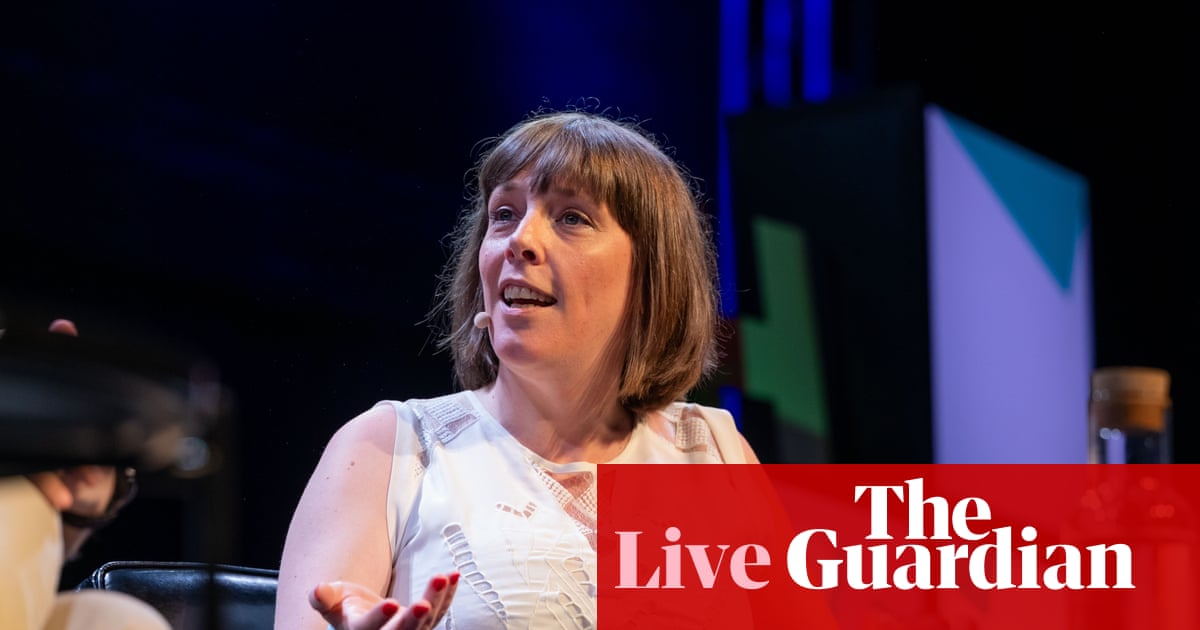
Child phone nudity law could largely end online child sexual abuse, in UK and globally, if widely adopted, Jess Phillips claimsJess Phillips, the former safeguarding minister, told the World at One that she believed that Google and Apple, the two companies that control the operating systems on almost all smartphones that are sold, could very quickly install the software that would stop them being used by children to take naked pictures.But she said, having worked on this issue for about 18 months (see 12.19pm), she had heard “every single corner-cutting excuse, work-around in the book from tech companies and those who seek to represent them” and so she expected further foot-dragging.She said she would like to contribute to drafting the legislation to force them to act if they do not do so voluntarily.She went on to say she would only believe the ban was actually happening when “a child picks up their phone, tries to take a naked image of themselves because they’ve been groomed to do it, and they won’t be able to do it”.But, if the ban does come into force, it could be tranformational, she said.Referring to figures showing that 91% of online child sexual abuse reports refer to self-generated content, she said she expected online abuse rates to “plummet” under this plan.She explained:
double quotation markWe have the opportunity here in a matter of months to basically eliminate child sexual abuse [online] in the UK.
And what is more is that, I cannot see a way that if we do this – when we do this, I should say – in the UK that phone manufacturers and countries around the world are going to say, ‘I’ll tell you what, we’ll import the phones that are good for paedohiles.’
So I don’t think we’ll just get rid of 91% of child abuse. I think we have the potential in what we’re going to do – and this is what I fought so hard for it – to end online child sex abuse, to cut child sex abuse around the world so dramatically.
ShareUpdated at 15.01 CESTKey events13m agoAfternoon summary37m agoUK to invest £750m in national AI supercomputer, Reeves says55m agoLib Dems say it's 'shameful' PM chose to 'beg' tech companies to act on nude phone pictures when he could just legislate2h agoBurnham calls for more use of detention for migrants facing deportation in byelection debate2h agoZack Polanski tells bakers' union that very cheap food in supermarkets suggests workers being exploited2h agoBurnham says he wants 'essential services back under public control' in BBC Manchester Makerfield byelection debate3h agoDfE opens call for evidence on when children should get first smartphone4h agoChild phone nudity law could largely end online child sexual abuse, in UK and globally, if widely adopted, Jess Phillips claims4h agoBadenoch declines to take sides in Vance/Lammy dispute, saying US and UK should stop criticising each other in public5h agoCharities welcome proposed child phone explicit images ban as 'strong step towards keeping children safe'5h agoStarmer should have announced child phone nudity ban earlier, not just when facing leadership challenge, Lib Dems say5h agoJess Phillips says her resignation letter may have given Starmer 'kick up the bum' to impose child phone naked image ban6h agoLabour leadership contenders challenged to back Lib Dem plan for £3bn 'essential energy guarantee', funded by windfall taxes6h agoBadenoch dismisses Starmer's proposed child phone nudity ban, saying general social media ban 'much simpler'7h agoUK will have 'one of most authoritarian internet regimes in world' under child phone nudity rules, says Big Brother Watch8h agoMeasures to stop children using phones for naked images 'already exist' but not applied by tech firms, government says8h agoHome Office says existing phones and tablets, as well as new ones, should be covered by proposed child nudity rules8h agoUK to be first country in world where it will be impossible for children to take naked pictures on phones, Home Office says8h agoStarmer says government will legislate if tech companies don't stop children using phones to take naked images8h agoStarmer gives speech at start of London Tech Week8h agoChildren's commissioner for England says restrictions on social media should cover 16 and 17-year-olds too9h agoUS defence secretary Pete Hegseth 'lacking in class' when he launched anti-migration rant at D-day ceremony, minister says9h agoKeir Starmer to say ‘tech revolution must work for everyone’ in speech on AIAfternoon summary
Shabana Mahmood, the home secretary, has urged US politicians not to comment on UK criminal justice matters. At Home Office questions in the Commons she was asked by Max Wilkinson, her Lib Dem opposite number if she would agree that JD Vance, the US vice president, and the US state department, who have both commented on the Henry Nowak murder, should “butt out of our politics, leave British law enforcement to Britain and, just as importantly, show respect for British victims of crime”. Mahmood replied:
double quotation markI would urge all commentators, would-be commentators, wannabes of every description that they leave our criminal justice system to us. We’ve been going for a very long time, and we will carry on in that vein.
Andy Burnham, the Greater Manchester mayor, Labour candidate in Makerfield and favourite to be next PM, has said that he would like to see more use of detention for migrants facing deportation because they have no right to be in the UK. (See 3.40pm.) He made the comment in a BBC Manchester byelection debate. The BBC has a live blog with extensive coverage.
The government has said that it is launching what it calls an advisory AI growth lab, which it describes as a system “to accelerate the development and deployment of AI products and services by helping innovators navigate existing regulatory frameworks with greater confidence”. The first initiative will focus on AI and legal services.
For a full list of all the stories covered on the blog today, do scroll through the list of key event headlines near the top of the blog.View image in fullscreenKeir Starmer delivering a speech at London Tech Week this morning. Photograph: Isabel Infantes/PAShareUK to invest £750m in national AI supercomputer, Reeves saysThe UK will invest £750m into a national artificial intelligence (AI) supercomputer as part of a £1.1bn plan to boost British work to develop, deploy and scale AI technologies, the Press Association reports. PA says:
double quotation markThis includes £400m to buy next generation AI chips, £150m of which is committed to go to British firms.
Rachel Reeves, the chancellor, also said the tender process for the Edinburgh supercomputer would soon begin as she spoke about the £1.1bn AI hardware plan.
She also said she was launching an AI advisory roadmap to provide practical guidance on how existing rules apply to emerging AI ahead of legislation to regulate the sector due in the autumn, which she announced in her Mais Lecture in March.
“I announced that we would legislate to give powers to safely test innovative products and services in ways current regulation prohibits.
“The secretary of state for business will bring forward that legislation in the autumn and, in advance of that, today, I am launching the advisory AI growth lab, bringing together regulators to provide practical guidance on how existing rules apply to emerging AI applications, with our first focus in legal services,” she told the AI adoption summit in London.
She said she would also publish a financial services AI adoption plan in her Mansion House speech on July 14.
View image in fullscreenRachel Reeves speaking at the AI adoption summit, in the Smith Centre at the Science Museum today. Photograph: Stefan Rousseau/PAShareUpdated at 18.22 CESTLib Dems say it's 'shameful' PM chose to 'beg' tech companies to act on nude phone pictures when he could just legislateDuring the Commons urgent question on the government’s plan to stop children being able to use their mobile phones to take nude pictures, the Liberal Democrats said it was “shameful” that Keir Starmer was asking the tech companies to act and not just legislating to make it happen.Munira Wilson, the Lib Dem education spokesperson who tabled the UQ, said:
double quotation markWe see a prime minister who spent months completely disengaged from the digital threats facing our young people, suddenly experiencing an 11th-hour Damascene conversion.
This sudden rush seems driven entirely by a looming ballot box in Makerfield and a full-scale rebellion on his own back benches.
We Liberal Democrats won’t criticise someone for reaching the correct position, even if it’s taken them some time, but unfortunately, this government’s actual approach remains profoundly weak.
It’s shameful that the prime minister has to beg big tech to stop the proliferation of child sexual abuse imagery. He could, and he should, make these changes anyway.
ShareUpdated at 17.51 CESTIn the BBC debate Sarah Wakefield, the Green candidate in Makerfield, accused the other main partie of proposing “the politics of cruelty” in what they were saying about asylum seekers.Speaking directly after Andy Burnham gave his answer on this issue (see 3.40pm), she said:
double quotation markWhat we’ve heard from the majority of the other parties isn’t a politics of compassion and kindness. It’s actually a politics of cruelty, particularly when it comes to asylum seekers.
And what we should really be thinking about is, we are a country that is built on immigrants. You go back far enough in any of our family histories and you will have a story about someone in your family coming to this country to make a better life.
And when it comes to how we work with asylum seekers that are coming here, we [the Greens] believe we should be giving them dignity, a right to work so that they can contribute while their asylum claims are being processed, and not create this division between them and us.
ShareAnnabel Tiffin, the presenter, ended the BBC debate by asking the candidates to name their favourite Wigan delicacy.(The Makerfield constituency is on the edge of Wigan. Makerfield itself is not a place. There is an Ashton-in-Makerfield, which is in the constituency, and an Ince-in-Makerfield which – confusingly – isn’t in Makerfield.)The Lib Dem’s Jake Austin opted for a chunky steak pie.Sarah Wakefield, the Green candidate, went for an Uncle Joe’s mint ball,Andy Burnham chose a “baby’s head” – or steak pudding.Robert Kenyon named a chunky steak – but on a brown buttered barm.And Michael Winstanley said his parents used to make sell pies in their shop, and so he said he would go for a meat and potato pie.Tiffin said she was disappointed that nobody mentioned a smack barm pea wet. For viewers and listeners outside the north west, it was explained this was “smack” (deep-fried potato) between bread with some of the water from mushy peas on top.ShareThe latest edition of the Guardian’s Politics Weekly UK is out. It features Pippa Crerar and Kiran Stacey talking about Keir Starmer’s announcement today about restrictions on mobile phone technology for children, and whether this is to do with Starmer searching for a legacy.ShareAt the end of the debate Robert Kenyon, the Reform UK candidate, asked Andy Burnham why he did not stand to be Makerfield MP at the 2024 election. Was the constituency at the bottom of his priority list then?No, said Burnham. He said that he had been serving the area for 25 years, as MP for Leigh (the neighbouring constituency), and then as mayor for Greater Manchester.ShareIn the BBC debate they are now talking about crime.Andy Burnham said Greater Manchester police force was failing for a long time. He said he had appointed a new chief constable, Stephen Watson, who he said was “the outstanding police leader in this country”. He said Watson has doubled the number of people being arrested.Michael Winstanley, the Conservative candidate, said that Burnham was also mayor when the Greater Manchester was failing.ShareBurnham calls for more use of detention for migrants facing deportation in byelection debateBack in the BBC debate, the second question was about immigration.Robert Kenyon, the Reform UK candidate, said that while he did not mind people coming to the UK legally, “if you’re going to come here illegally, then you need to be deported ultimately, because it’s costing the taxpayer billions”.Andy Burnham said for him this was an issue of control.
double quotation markIt’s this thing about control, isn’t it? It feels like the country isn’t functioning properly, running things properly, in the small boats issue. And people want it to be dealt with.
Burnham said the government needed to “go further” in tackling small boats crossing. He said he agreed with the Conservative candidate, Michael Winstanley, about the case for greater use of detention for people facing deporation. He said:
double quotation markI think we need to make greater use of detention so that people who’ve got no basis for a claim are not actually admitted into the country [and] dealt with quickly and there’s a speedier return.
Actually returns are up under this government, the people who are returned to their country of origin.
So the issue has to be dealt with. It is something that just has to be gripped and gripped properly, because it is about trust in politics. And it is one of those things that is fraying trust to a degree.
Picking up on a point made by Kenyon, who complained about the large number of asylum seekers being housed in HMOs (houses in multiple occupation), Burnham said he had long argued that “it’s not right that the Home Office just goes to the areas where housing is lower cost, and overly uses those areas, when it comes to [finding accommodation for] asylum dispersal.”He went on:
double quotation markI have argued strongly, repeatedly as mayor of Greater Manchester, that all areas of the country should play a role. It’s not right that the Home Office just comes to the some of the more deprived parts of the country. That is a massive change that is needed.
UPDATE: Burnham said that he used to be an immigration minister in the Tony Blair government. He oversaw returns. At that point the goverment did get a grip. This government was also getting a grip, he said, but it needed to go further.Asked if that meant he would “get more of a grip on it again” if he returned to parliament, Burnham replied: “Correct.”View image in fullscreenAndy Burnham in BBC debate Photograph: BBCShareUpdated at 17.26 CESTZack Polanski tells bakers' union that very cheap food in supermarkets suggests workers being exploitedShoppers should not be able to buy vegetables for 7p because it is a sign of exploitation in the system, Zack Polanski said today.Speaking at the baker’s union conference, Polanski called for tougher regulation of supermarkets and claimed the food system was in crisis.Polanski said:
double quotation markWe do need to talk about supermarket regulation. It cannot go on as it is.
I was thinking of a friend of mine the other day – who I’m not judging for this, I understand, but they were really excited that they were buying vegetables for 7p in one of the supermarkets.
That is not a sign of a healthy system … someone is being exploited somewhere and if you are paying 7p for vegetables then something is not right.
Yes, there’s a cost-of-living crisis. Yes, governments and local councils need to do everything they can to keep food prices down and make sure that people can afford to eat and, in the same breath, we need to make sure that we’re paying our workers properly and that people have proper dignity and working conditions.
And one of the most obvious places where that exploitation is happening is in the supermarket, where a largely unregulated sector, or a sector that has not been regulated enough, has been exploiting both the workers in the supermarkets and the farmers and agricultural workers and, yes, sometimes the people who are suffering from the cost-of-living crisis too.
The Bakers, Food and Allied Workers’ union (BFAWU) represents workers in the food sector.ShareBurnham says he wants 'essential services back under public control' in BBC Manchester Makerfield byelection debateBBC Radio Manchester is holding a Makerfield byelection debate. You can listen to it here. BBC News are also showing it too.There are 14 candidates in the election. Only five of them are taking part: Andy Burnham (Lab), Robert Kenyon (Reform UK), Michael Winstanley (Con), Jake Austin (Lib Dem) and Sarah Wakefield (Green).The first question was about the cost of living. Burnham was invited to explain what his plan was, and he said that as Greater Manchester mayor he had imposed a £2 cap on bus fares. And he said within a couple of years he would bring all the rail stations in the Makerfield constituency into the ambit of the Greater Manchester Bee network, which he said would cut rail costs.But he said he wanted to see stronger control of other public services, like water. He went on:
double quotation markIn the water industry, we’ve got a situation where the private interest predominates over the public interest. Exactly like buses in Greater Manchester when I came in as mayor in 2017.
And it’s a situation where the shareholders never lose and the public never wins.
I believe strongly that we need to put these essential services back under public control. Water, energy, housing – getting rents down.
View image in fullscreenBBC Manchester’s Makerfield byelection debate Photograph: BBCShareCatherine Atkinson, the victims minister, was also on Radio 4’s the World at One today. Like Jess Phillips (see 1.59pm), she also said the new nude images requirement for phone providers – to be imposed by law, if they don’t comply voluntarily – could be a game changer in the battle against online child sexual abuse.She explained:
double quotation markI think it’s a really significant pillar. There’s no point in asking a young girl, a child, to send a photograph if they cannot take one, they cannot share it and they can’t even see it. This will be such a significant change.
ShareDfE opens call for evidence on when children should get first smartphoneThe Department for Education has opened a “call for evidence” as part of an inquiry that will lead to the production of advice about when children should be given their first smartphone, and how they should manage their screen use generally. It will be led by Dame Rachel de Souza, the children’s commissioner for England, and Prof Russell Viner. De Souza and Viner recently produced guidance on screen time for under-5s.In an interview this morning, de Souza said that she would like to see children under the age of 18 protected from harmful social media platforms. (See 9.16am.)In its news release, the DfE says:
double quotation markNew polling published today shows that 86% support the government’s screen use guidance for under-fives, while 82% say it is already helping families build healthier habits for young children.
The need for support is clear. While 96% of parents believe their child benefits from being online, fewer than three in ten think the benefits outweigh the risks when it comes to social media, messaging and video-sharing platforms.
The call for evidence will also seek views on screen use in schools, recognising that children’s digital lives span both home and education. Evidence gathered will help inform the new guidance as well as wider work to ensure technology used in classrooms supports learning, improves outcomes and protects children from harm.
There is information about how to respond to the call for evidence here.ShareChild phone nudity law could largely end online child sexual abuse, in UK and globally, if widely adopted, Jess Phillips claimsJess Phillips, the former safeguarding minister, told the World at One that she believed that Google and Apple, the two companies that control the operating systems on almost all smartphones that are sold, could very quickly install the software that would stop them being used by children to take naked pictures.But she said, having worked on this issue for about 18 months (see 12.19pm), she had heard “every single corner-cutting excuse, work-around in the book from tech companies and those who seek to represent them” and so she expected further foot-dragging.She said she would like to contribute to drafting the legislation to force them to act if they do not do so voluntarily.She went on to say she would only believe the ban was actually happening when “a child picks up their phone, tries to take a naked image of themselves because they’ve been groomed to do it, and they won’t be able to do it”.But, if the ban does come into force, it could be tranformational, she said.Referring to figures showing that 91% of online child sexual abuse reports refer to self-generated content, she said she expected online abuse rates to “plummet” under this plan.She explained:
double quotation markWe have the opportunity here in a matter of months to basically eliminate child sexual abuse [online] in the UK.
And what is more is that, I cannot see a way that if we do this – when we do this, I should say – in the UK that phone manufacturers and countries around the world are going to say, ‘I’ll tell you what, we’ll import the phones that are good for paedohiles.’
So I don’t think we’ll just get rid of 91% of child abuse. I think we have the potential in what we’re going to do – and this is what I fought so hard for it – to end online child sex abuse, to cut child sex abuse around the world so dramatically.
ShareUpdated at 15.01 CESTThere will be three urgent questions in the Commons this afternoon. Here is the list, with rough timings.After 3.30pm: A science minister will respond to a UQ from the Lib Dems’ Munira Wilson about the child phone sexual images ban proposed today.Around 4.15pm: An environment minister will respond to a UQ from Labour’s Clive Lewis “on systemic failures across the water sector”.Around 5pm: A Foreign Office minister will respond to a UQ from Jeremy Corbyn about “the deteriorating humanitarian situation in Cuba, following the US naval and financial blockade of the island”.ShareBadenoch declines to take sides in Vance/Lammy dispute, saying US and UK should stop criticising each other in publicKemi Badenoch has said that British politicians and their US counterparts should stop criticising each other publicly.Asked by the Press Association about JD Vance, the US vice president, claiming that the murder of Henry Nowak was due to the UK government’s immigration policies (or the elite’s “politics of self-hatred”, as he put it), and David Lammy, the deputy PM, subsequently telling Vance he was wrong, Badenoch decided she could not side with either of them.Instead Badenoch said:
double quotation markDavid Lammy has the right to say what he thinks about this issue, but I do think that there is a problem, especially with social media, of so many politicians commenting about what’s happening in other countries.
David Lammy and others made very vocal criticisms about the death of George Floyd, that is the justification that Americans are now using.
I think we just need to stop all of this, this endless war of words publicly.
People should be dignified when talking to foreign counterparts. Let’s keep the negative feedback with our allies in private, otherwise we’re just helping countries like Iran and Russia who want to see us at loggerheads.
Badenoch has not always followed her own advice. Earlier this year, as she was trying to distance herself from her initial support for Trump’s war against Iran, she said the US president’s criticisms of Keir Starmer were “childish”. She also said Trump should have to clear up the “mess” his war had left.View image in fullscreenKemi Badenoch with Stuart Machin, the M&S CEO, visting a store in Victoria, London, this morning. Photograph: Carl Court/Getty ImagesShareThe NAHT union for school leaders has welcomed the ultimatum to tech companies to stop children being able to use mobile phones to take naked images. Sarah Hannafin, the union’s head of policy, said:
double quotation markNAHT is clear that the ability to send or receive nude images or videos should absolutely be age restricted to safeguard children and young people.
The impact of sharing such content can also spill over into the classroom and playground, affecting children’s happiness and wellbeing.
Where tech firms do not act, it is only right that ministers compel them to do so, and we hope this move will be followed by further action to ensure all devices and online platforms are safe for children following the government’s recent consultation.
Share