'My 11-year-old woke up with a numb arm - she died 15 days later'
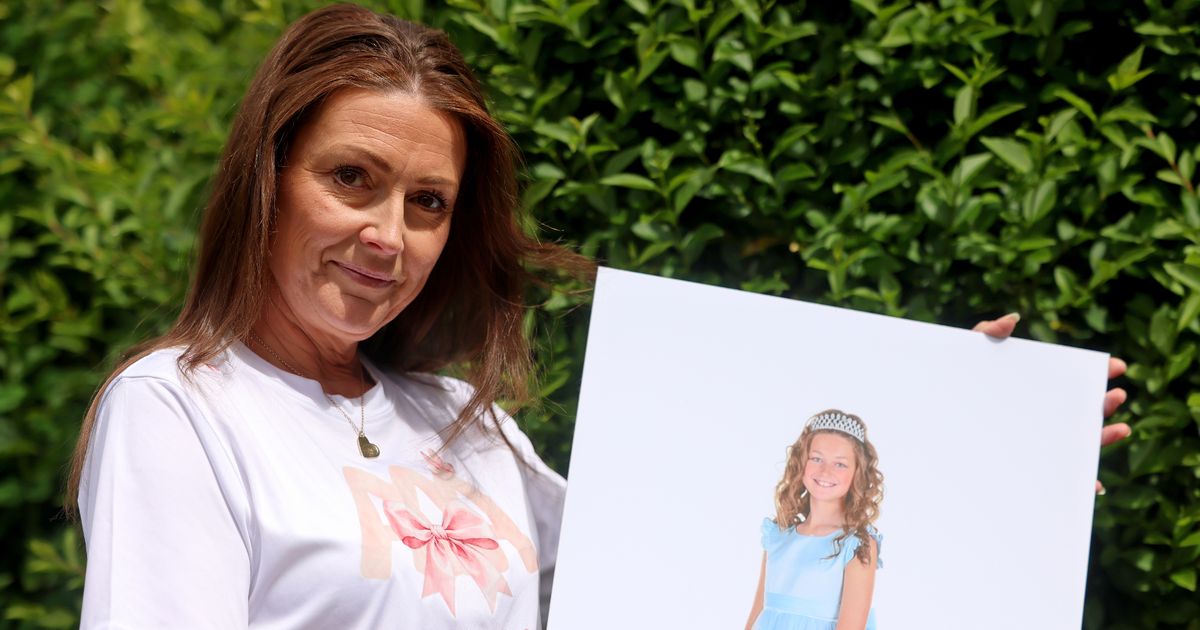
For 11 years, Alicia-Adele Axiak filled the world around her with energy, kindness and joy. She was the one who volunteered first, comforted others without hesitation and made friends wherever she went. To her family, teachers and everyone who knew her, she was simply unforgettable.However, after what began as an ordinary school week, everything changed. Within days of first complaining about numbness in her arm, the young girl from Caerphilly was diagnosed with an aggressive and incurable brain tumour. She died 13 days later, 15 days after her first symptoms.Now, her mother Amanda Axiak is determined to ensure Alicia-Adele's kindness, determination and love for life are never forgotten.The first word that comes to Amanda's mind when describing Alicia-Adele is "angel", because that was who she was - in every sense of the word."I know everyone says that their child is perfect," Amanda acknowledges. "But she really, really was. She was the perfect child."Despite her young age, Alicia-Adele had already packed more life, love and determination into her years than many people do in a lifetime. She was the kind of person that everybody gravitated towards: fearless, compassionate, endlessly energetic and always smiling."She just loved life," Amanda says. "She grabbed everything that came her way."Alicia-Adele wanted to go places, do things, experience everything. Whether it was dancing, gymnastics, swimming, Cubs or school netball, she threw herself into every opportunity with complete enthusiasm. "She was unbelievably active and so fit," Amanda recalls."Nothing was too heavy or too high for Alicia. Even in school, if the teachers asked, 'Can someone do it?', she was almost always the first to put her hand up."Her vivacity and verve for life was something her family loved the most about her. "She was a family girl, she had her three older brothers - Lloyd, Llewellyn and Llewys - completely wrapped around her finger," Amanda adds with a laugh. "She idolised them."Most of all, it was Alicia-Adele's kindness that set her apart. "If there was ever a child on their own, they weren't on their own for long," Amanda says. "Alicia would take them under her wing. She had so much love to give children."That compassion left such a profound impact that the school Amanda has worked at for nearly two decades created a permanent tribute in Alicia-Adele's honour: an annual Kindness Award named after her."They started an award last year for Alicia-Adele called the Kindness Award because she was just known for it," Amanda explains. "She'd walk into any shop and if someone needed help, she'd ask, 'Can I help?'"It is that very trait that prompted Alicia-Adele to think about what she would like to do in the future. "Always, always, since I can remember, her dream was being a paediatric doctor," Amanda says. "When Alicia was eight years old, I bought her her first real nursing book. She would spend hours playing doctors and talking about helping sick children one day."She always said, 'I want to help children.' She never wanted to work with adults - she'd make me laugh. She used to say to me, 'I don't want to work with adults, Mam, because adults moan.'"Amanda laughs at the memory, "I always thought, well, to be fair, she's probably right."It is this ambition and zest for life, that makes what happened so incredibly difficult to comprehend. Stay informed on the latest health news by signing up to our newsletter hereOn Tuesday, April 8, 2025, Alicia-Adele attended dance class, preparing for competitions taking place that weekend. The following day, she stayed after school to take part in a netball tournament. It was, by all accounts - a normal week for the active 11-year-old.Then, on Thursday, April 10, everything changed. "We were all getting ready for work, college and school," Amanda remembers. "I was doing my makeup when Alicia came in and said, 'Mam, I've got a bit of a numb arm. It just doesn't feel right.'"At first, Amanda thought nothing of it, writing it off that Alicia may simply have slept awkwardly or over-exerted herself during netball. Alicia-Adele continued getting ready for school, while the pair messaged throughout the day. But as the hours passed, the symptoms worsened."She told me, 'My face feels a bit numb on one side.' I didn't like that," Amanda says.Amanda advised Alicia-Adele to speak to the school's first aid staff. Then, later that afternoon, her daughter phoned again. "That's when she said, ‘I’m struggling to walk.’ Her leg had started to go numb."Amanda immediately contacted her GP surgery. "Within seconds, the doctor phoned me back and said, 'You need to go straight to the Grange University Hospital because it sounds like stroke symptoms,'" Amanda shares.That afternoon, Alicia's parents took her to hospital after she had spent the entire school day trying to carry on as normal. Doctors decided to keep her in overnight so she could undergo an MRI scan on Friday.Remarkably, despite everything, Alicia was devastated about missing school. "She had 100% attendance," Amanda says. "I remember joking with her and saying, 'Most children cry because they have to go to school and you’re upset because you can’t.' I was just trying to make light of it for her."However, nothing could prepare the family for the results, which would come on Saturday, April 12. Just two days after those initial signs, Alicia-Adele's family received the devastating news that Amanda says was "impossible" to put into words.Alicia-Adele had been diagnosed with an inoperable and incurable diffuse midline glioma, commonly known as DIPG - an aggressive childhood brain tumour and the leading cause of brain tumour deaths in children. The average prognosis is just eight to 12 months.Until that moment, Amanda and her family had no idea that brain tumours were the leading cause of cancer death in children and adults under the age of 40 in Wales. Brain Tumour Research states that survival rates remain devastatingly low, with only 17.2% of patients in Wales surviving five years or more after diagnosis, compared with 61.5% across all cancers.For many families, statistics like these remain distant and unimaginable - until they suddenly become your reality. For Alicia-Adele's loved ones, that reality arrived in an instant."I almost collapsed," Amanda says emotionally. "I felt like I had an out-of-body experience. My world had ended that day."What made the diagnosis even harder to comprehend was how completely normal Alicia-Adele had seemed beforehand."She was perfect. There was nothing wrong with her whatsoever - no headaches, nausea, fever, nothing," Amanda recalls. "They said to me in the hospital they would have picked this up in an eye test but I'd taken her for an eye test at an optician in Caerphilly in March, the month before, and there had been nothing. We had no inkling that this was happening."Dr Karen Noble, director of research and policy at Brain Tumour Research, said: "There are more than 120 different types of brain tumour, and symptoms can differ greatly depending on where the tumour is located."Common symptoms can include headaches, dizziness, coordination problems, changes in vision or hearing, nausea, or changes in the way somebody walks. But many of these symptoms are vague and can easily be attributed to other conditions."In Alicia-Adele's case, there were very limited symptoms, which is why it came as such a shock to the family. We also know that many patients visit their GP several times with symptoms like headaches before a diagnosis is made. Around 40% of brain tumours are diagnosed in accident and emergency departments because they can be so difficult to detect through non-specific symptoms alone."She added that one of the biggest challenges for doctors was the lack of rapid diagnostic tools that could help identify when seemingly ordinary symptoms might point to something far more serious.Nothing could brace Alicia-Adele and her family for what was an extremely shocking diagnosis, but the young girl continued to show the same kindness and strength that had always defined her."She knew that she was poorly, but we kept the full extent of the diagnosis from her because we wanted her to hold on to hope," Amanda says. "My mum has had cancer three times and she beat it. Alicia had seen her grandmother get better, so I knew she believed she could get better too."Behind closed doors, however, Amanda was struggling to process the enormity of what the family had been told. "I had my days where I'd wake up in the morning and sob while Alicia was still sleeping," she says. "But then Alicia would wake up, and I'd pull myself together and be a big brave mammy."Meanwhile, Alicia-Adele continued to astound everyone around her."She was still so funny. Still bursting with personality. It would break my heat as well, because we'd go around the hospital and she would say 'oh mam, I hope these children will be okay'. I'm just thinking about she was still so selfless. Still putting other people before her. And me knowing how ill she was and how she was still thinking of other children... she inspires me."Fifteen days after Alicia-Adele's first symptoms appeared, and just thirteen days after her family learned the devastating truth about her illness, she passed away - altering their lives forever."It ripped us apart," Amanda says. "It changed the way I saw the world. I'd be walking down the street and see children, and I'd shudder, because I'd think: that child's world - or that family's world - could end within days, and they'd have no idea."In the aftermath of unimaginable loss, Amanda has channelled her grief into campaigning for change. After learning that brain tumours have received just 1% of UK cancer research spending since 2002, she hopes that by sharing Alicia-Adele's story she can help push the newly elected Senedd to take urgent and transformative action to improve outcomes for brain tumour patients in Wales."I'm trying to turn heartbreak into hope," she says. "I want to change things for other families, because if I can do something that helps even one family, then I know Alicia's life wasn't in vain. As long as my heart beats, so does hers."Dr Noble also outlined the key priorities for brain tumour research in Wales and the action needed from the Welsh Government - which were highlighted in the organisation's manifesto."Increased investment is essential," she says. "The only way we are going to find a cure, and develop better treatments for brain tumours, is by deepening our understanding of the science, the biology and the mechanisms behind these diseases."We also know there is a severe lack of clinical trials in Wales. When someone is diagnosed with a brain tumour, it's vital that we understand not only the type of tumour they have, but also its specific mutations. Even when patients are diagnosed with the same tumour type - such as the diffuse midline glioma Alicia-Adele had - every tumour can have its own unique molecular makeup."The more we understand about the genetics and molecular characteristics of a tumour, the more opportunities there may be to access emerging treatments, many of which are available through clinical trials."She adds: "That's why we need more clinical trials in Wales, particularly for brain tumours. We also need broader access to genomic testing, so we can identify patients who may be eligible for trials that are not traditionally associated with brain cancer."For example, a clinical trial may be designed for lung cancer patients with a particular mutation, but if that same mutation is found in a brain tumour patient, that treatment could potentially benefit them too. We need systems in place to ensure those opportunities are accessible."So our three main asks are clear: increased investment in brain tumour research, better access to genomic testing to fully understand tumour biology, and greater access to clinical trials for patients in Wales."In addition to this, Brain Tumour Research has also worked with Amanda to launch the Alicia-Adele's Angel fundraising group. Amanda shares: "I came up with the name 'Alicia-Adele's Angels', because she herself is an angel but also because of her always wanting to be a paediatric doctor. I think 'angels' is what Alicia would have classed her patients. It couldn't have been a more poignant name."So far, Amanda has already achieved a lot under her daughter's name, including a 2k and 10k run around Bryn Meadows Caerphilly 10K (and 2K) on Sunday, May 10 in her memory. Participants included staff from Alicia-Adele's schools, St Cenydd, and Cwm Ifor Primary School, nurses from the Grange University Hospital who cared for Alicia-Adele in her final days, as well as friends and family, including Amanda and Alicia-Adele's brothers. The event raised over £4,000 for Brain Tumour Research.However, this is just the start for Amanda. "We're gonna do a walk of hope in September. I'd like to do a concert down our local community centre for Christmas time to raise money. There's just no stopping from now, as far as I'm concerned, this is part of my life forever now - and that's carrying Alicia's legacy through and through and though and through."I am so immensely proud to be her mammy, and I will make sure she is never forgotten."You can still donate to Alicia-Adele's Angels here.The Welsh Government has issued the following statement, on how it will proceed with research: "Research supported through Health and Care Research Wales has enabled studies across a range of conditions, including brain cancer – from improving our understanding of the disease to exploring new treatments."This new government’s Cancer Plan for Wales will place a strong emphasis on research, innovation and improving access to clinical trials so more patients can benefit from new treatments, including for brain cancer. We are also planning a Wales Cancer Conference next year to bring together experts and share best practice in cancer care."We also recognise how vital properly stored tissue is for diagnosis, research and access to new treatments. We are committed to strengthening legal safeguards so that high-quality methods of tissue preservation become standard, giving patients and families greater confidence and improving access to cutting-edge care."