Ukraine's Ex-Foreign Minister Says He Was Kicked Out for Being More Popular than Zelensky
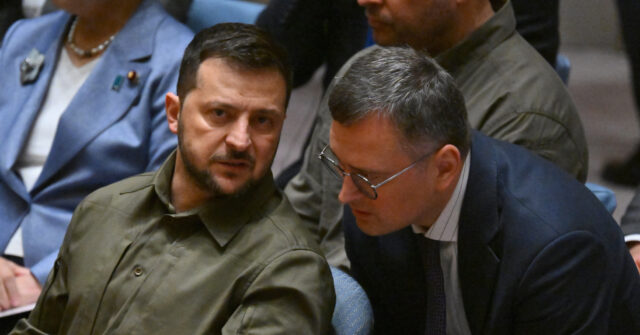
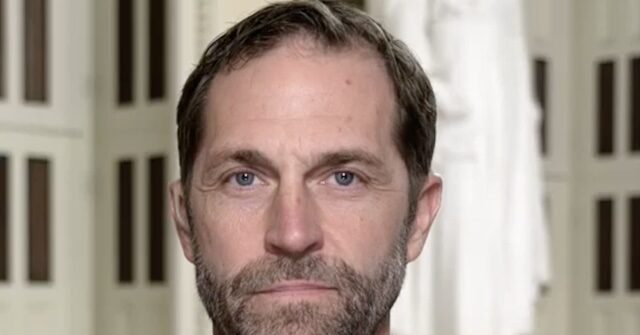
Former Ukrainian Foreign Minister Dmytro Kuleba, who left office under murky circumstances last year, resurfaced in an interview this week accusing President Volodymyr Zelensky of ousting him for being too popular.
Kuleba also claimed that the Ukrainian people were ready for fresh elections and new leadership and that a presidential election would occur “immediately” after a ceasefire deal.
The former Ukrainian foreign minister said he was kicked out because an opinion poll showed him ahead of the nation’s President Volodymyr Zelensky. Kuleba had been the jet-setting head of Ukrainian diplomacy from 2020 to Autumn 2024 and was known for his persistent pleading for weapons donations, his sometimes combative nature, and being the last holdout of the suit and tie in Ukrainian politics.
He told Italian newspaper La Repubblica that he foresaw his own ouster last year.
The former foreign minister said of a 2024 poll tracking public approval ratings for Ukrainian state institutions and politicians which found him beat out the president by one per cent:
When the polls showed me ahead of Zelensky, I told my wife: ‘Honey, I’m about to be kicked out’ … One day, in the spring of 2024, a poll was released on trust in Ukrainian politicians, and surprisingly, I was one point ahead of Zelensky. I went home and told my wife: ‘Honey, I’m about to be kicked out, it’s just a matter of time.’
Kuleba resigned in September 2024, but the fact that he was to be “fired” had been leaked in the Kyiv state media the day before, suggesting he was more pushed than jumped.
When prompted in the interview, Kuleba agreed that he had been ousted because he was too independent and popular, but also because “I wasn’t willing to become a mere executor of other people’s instructions; a foreign minister must be able to have his own opinion.”
While the future of democracy in Ukraine has been hotly debated for years, and that criticism escalated after the Donald Trump White House condemned Kyiv for having suspended elections over the course of the war, Kuleba asserted there was a great deal of enthusiasm for fresh elections, stating the country needs a “reset.”
“The people feel that the country needs a reset. If there is a truce, we will go to the polls immediately,” Kuleba said.
President Zelensky is not a certain winner, Kuleba implied, though he predicted Zelensky would continue in Ukrainian public life somehow even if he lost. He told La Repubblica: “Even if he isn’t re-elected, he will still have a future. Like it or not, he is a figure of historic stature, and it’s not necessary to hold office to make your voice heard.”
Kuleba has previously spoken out in favour of a peace process, arguing that Ukraine’s military position is not good and “things look bad on the battlefield.” Nevertheless, speaking now, he identified the very difficult choices to be made by Ukraine’s leadership on whether they accept what’s on the table now or not, including that accepting a bad peace deal could be very internally destabilising for Ukraine.
Kuleba estimated that one major problem for Ukraine is that Putin can continue the fight longer and so is in no hurry to come to the table, while Ukraine may only have a couple of years left.
“Our dilemma lies in two questions: if we sign a bad agreement now, will the country survive the internal shock? If we don’t sign it, and in a year we’ve lost more land and more lives, will we find ourselves with the same offer on the table?” he asked. “As you can see, the decision is complicated. And in any case, I don’t know a single Ukrainian who believes that an agreement with Russia truly means the definitive end of the war.”
Kuleba also touched on other current issues, including the now wide-ranging anti-corruption investigation in Ukraine that has seen several very senior government figures close to Zelensky, including his chief of staff and former business partner investigated. This is a positive development, Kuleba said, because it shows “no one is untouchable” and Ukraine needs to crack down on corruption. The peace talks brief being handed to a senior Zelensky ally who has been touched by the scandal is not a problem, Kuleba reasoned, because he had only been interviewed by the counter-graft police as a potential witness and not as a suspect.
Kuleba also responded to fresh comments by a leading NATO officer, who has spoken of the alliance needing to consider a pre-emptive first-strike in its portfolio of deterrence. This has caused predictable controversy and this is because, Kuleba said, the military side of NATO has already reconciled itself to war coming to Europe while the political side cannot bring itself to hear that.
“NATO’s military side is aware that we’re moving toward war, but the political side doesn’t want to acknowledge it,” he posited. “Today, the only one talking about it is German Defence Minister Boris Pistorius, and I know President Macron thinks the same way. Russia is preparing an attack on Europe. And the more Putin repeats that he doesn’t want to do it, the more you should believe me.”