Exclusive — Rep. Brett Guthrie: E.U. Regulations Are Blocking Access to 'Affordable American Energy'
House Energy and Commerce Committee Chairman Brett Guthrie (R-KY) told Breitbart News that European regulations are hampering the continent’s ability to obtain reliable American energy.
“Red tape and burdensome regulations have hurt Europe’s ability to take advantage of reliable and affordable American energy. By taking a commonsense approach that leverages American LNG, Europe can prevent blackouts while ensuring their energy sources don’t rely on supplies from adversarial nations,” Guthrie told Breitbart News in a written statement.
The Energy and Commerce Committee chairman spoke to Breitbart News as the European Union (E.U.) moved to scale back its corporate sustainability due diligence directive (CSDDD), which requires companies to fix human rights and environmental issues in their supply chains or face fines up to five percent of global turnover. Even though the E.U. has voted to scale it back, experts warn the CSDDD still represents a massive regulatory burden for American and other non-European companies.
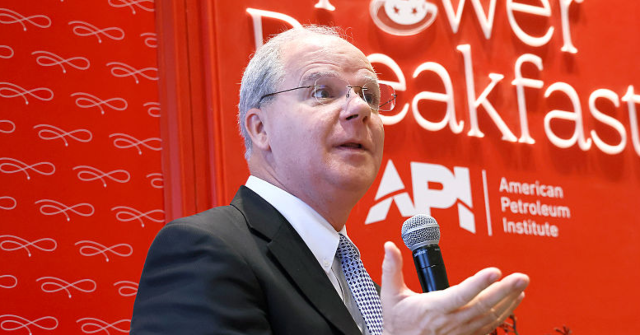
American Petroleum Institute senior vice president of policy Dustin Meyer in August warned that the CSDDD would impose “massive, mandatory, extraterritorial” regulations on American companies.
The regulation has become an international flashpoint as the United States and Qatar have raised the alarm, demanding that CSDDD be rolled back further.
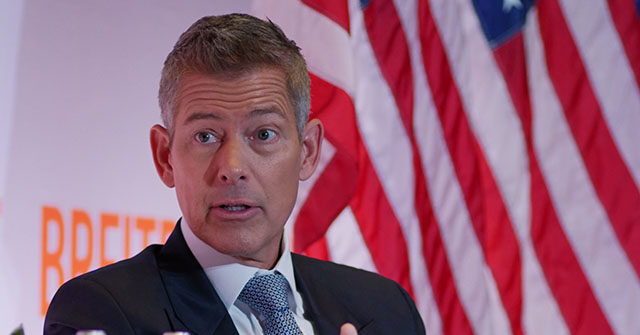
Energy Secretary Chris Wright and Qatari Minister of State for Energy Affairs Saad Sherida wrote to E.U. member states in October:
We have consistently and transparently communicated how the CSDDD, as it is worded today, poses a significant risk to the affordability and reliability of critical energy supplies for households and businesses across Europe and an existential threat to the future growth, competitiveness, and resilience of the E.U.’s industrial economy. It is our genuine belief, as allies and friends of the E.U., that the CSDDD will cause considerable harm to the E.U. and its citizens, as it will lead to higher energy and other commodity prices, and have a chilling effect on investment and trade.
…
Together, these provisions pose significant challenges and seriously undermine the ability of the American, Qatari, and broader international energy community to maintain and expand their partnerships and operations within the E.U.
With the mid-November vote, the European Parliament stipulated that only companies with at least 5,000 workers and $1.75 billion in revenue should comply with the onerous requirements, and scrapped the need for the regulated companies to propose plans to meet climate change goals. Previously, companies with 1,000 employees and €450 million revenue would have to comply with the CSDDD requirements.
Companies such as TotalEnergies and ExxonMobil have argued for the E.U. to scrap the rules entirely, arguing it makes it too difficult to do business in Europe.
The Wall Street Journal reported how Europe’s rush to green energy and slashing greenhouse gas emissions is crippling its economy.
The National Association of Manufacturers (NAM) has noted that E.U.’s changes to which companies are required to comply with the CSDDD would still impact many American companies, and U.S. manufacturers will still have to assess the risks posed by their indirect business partners.
“As a result, the directive’s requirements could stretch deep into manufacturers’ supply chains, implicating small, privately held, and non-E.U. businesses,” NAM wrote in October.
“CSDDD would impose significant, extraterritorial burdens on America’s manufacturers,” NAM Managing Vice President of Policy Charles Crain said. “Manufacturers appreciate the Trump administration standing up for our industry on the world stage, and we urge both American and European policymakers to protect U.S. companies from this costly and unworkable burden.”
ExxonMobil CEO Darren Woods referred to CSDDD as the “worst piece of legislation I’ve seen since I’ve been in this job.”
”We see this as untenable,” Darren warned. “Our ability to continue to operate and do business in Europe with that law hanging over our heads I think is going to make it impossible to continue what we’ve been doing. It’s only going to accelerate our exit from Europe.”