One of Your Favorite Cooking Oils Is Under Fire — & It Might Explain Why You’re Feeling More Inflamed
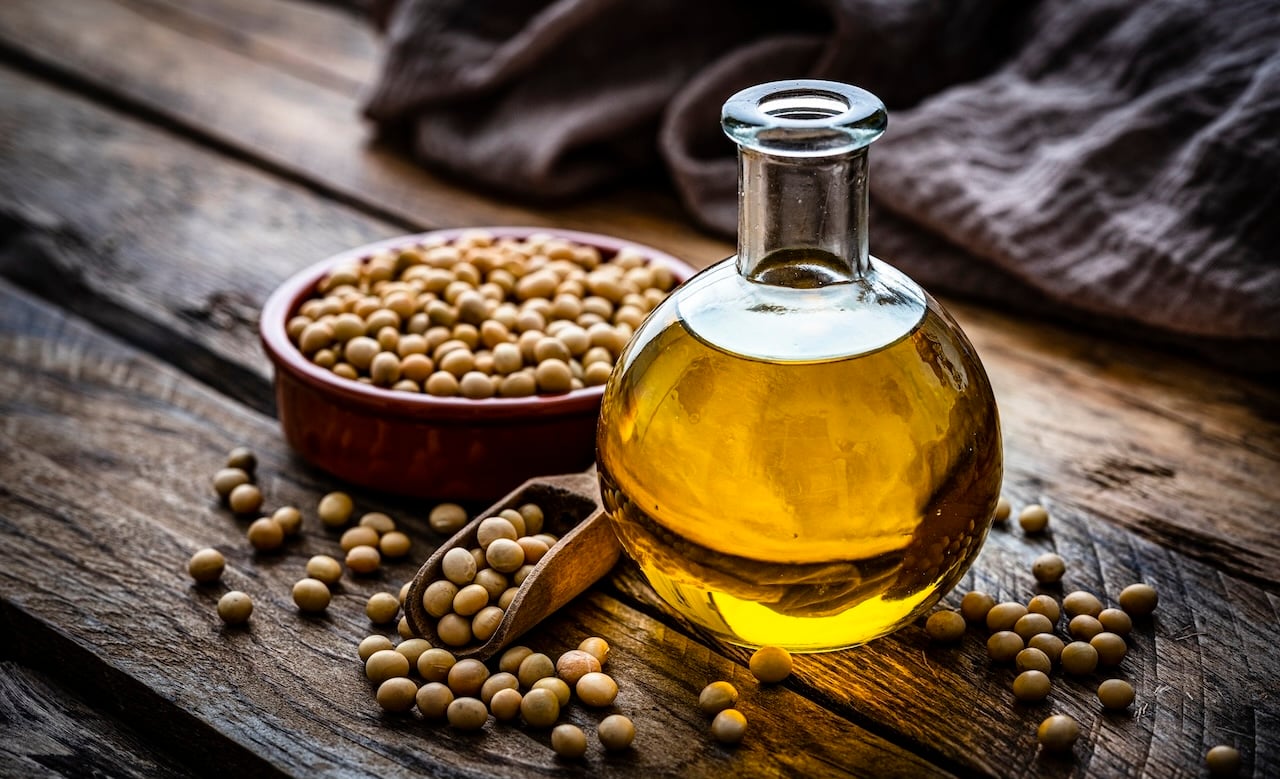
Soybean Oil Weight Gain Study; Photo via Getty Images
If you’ve ever grabbed a bottled vinaigrette, ordered takeout, or eaten literally any packaged snack this week, you’ve probably had soybean oil. It’s cheap, neutral, and everywhere — so embedded in the food system that Americans now get nearly 10% of their daily calories from it.
That alone doesn’t make it “bad.” But a new study from UC Riverside, published in the Journal of Lipid Research, is shining light on why our modern relationship with this oil may be out of sync with what our bodies evolved to handle.
And the results are making the wellness world perk up.
The Study Everyone’s Talking About
Here’s what researchers did: they fed mice a high-fat diet rich in soybean oil. Most mice gained significant weight, consistent with nearly a decade of UC Riverside research showing soybean oil is more likely to drive weight gain than other fats like coconut oil.
But one genetically engineered group of mice? They didn’t gain the weight.
They produced an alternate version of a liver protein called HNF4α, which regulates hundreds of genes related to fat metabolism. Humans also have two versions of this protein, and which version your body leans on can depend on age, genetics, stress, illness, and even medications.
Translation: this might explain why two people can eat the same foods but have wildly different metabolic responses.
The Real Plot Twist: It’s Not the Oil — It’s What Your Body Turns It Into
The buzzy part of the study isn’t about calories; it’s about biochemistry.
Soybean oil is high in linoleic acid, an omega-6 fatty acid also found in corn, sunflower, and safflower oils. When the body processes linoleic acid, it can generate compounds called oxylipins — molecules associated with inflammation, fat storage, and metabolic stress.
The altered mice didn’t produce as many of these oxylipins, had healthier livers, and showed stronger mitochondrial function (basically: better metabolic “engines”). The regular mice did not.
It’s a small but compelling window into how certain ingredients may interact with our metabolism — especially in an era where ultra-processed foods rely heavily on these oils.
A Wellness Wakeup Call — Without the Fearmongering
Let’s be clear: This study was done on mice. No one is telling you to toss your pantry.
But here’s what nutrition and research experts increasingly agree on: It’s not that soybean oil is inherently harmful — it’s that modern diets include it in amounts our bodies were never designed to metabolize daily. And because enzymes that convert linoleic acid into oxylipins vary from person to person (and are influenced by genetics, hormones, sex, stress, and diet), the impact may be different for everyone.
It’s the intersection of science and individuality — something the wellness world has been circling for years.
The Most Interesting Finding? It Was Hidden in the Liver
The UC Riverside team found that oxylipin levels in the liver — not the bloodstream — correlated with weight gain in mice.
This matters because most consumers rely on generic blood panels to understand metabolic health. This research suggests early dietary effects may be invisible through standard testing.
Another reminder that metabolic wellness is far more complex than fasting glucose or cholesterol counts.
Photo via Getty Images
So… Should You Stop Using Soybean Oil?
You don’t need to panic-delete half your kitchen. But this is a smart moment to check in with your habits.
1. Look at your labels — especially on “healthy” store-bought items.
Soybean oil is in many foods marketed as “clean,” “light,” or “heart-healthy.”
2. Ultra-processed foods remain the bigger issue.
It’s the volume — not a single drizzle of oil in your pan — that matters.
3. Consider balancing with oils richer in monounsaturated fats.
Olive oil, avocado oil, and high-oleic sunflower oil are great everyday staples.
4. Remember: your metabolism is personal.
Two people can react differently to the exact same diet. This study reinforces that.
Why This Study Matters Now
The U.S. has seen soybean oil intake increase fivefold in the last century — a shift that mirrors our rise in highly processed convenience foods, and also weight gain. And with nutrition science now moving beyond “low-carb vs. low-fat” and into cellular metabolism, this research is part of a much bigger cultural moment:
We’re finally talking about how food actually interacts with the body, instead of just calories, macros, or outdated diet rules. This is the kind of nuance the modern wellness consumer craves — and what makes this study stand out in a crowded nutrition news cycle.
The Bottom Line
This UC Riverside study doesn’t tell us what to eat — but it does invite us to rethink how often we rely on foods built around industrial oils rather than whole ingredients.
And as the researchers themselves note, soybean oil isn’t the villain. It’s the quantity and the processing of soybean oil, and the modern dietary context that make the picture more complicated in terms of health and weight gain.
Think of this less as a warning label and more as a reminder: the body is incredibly sophisticated — and sometimes, the most “ordinary” ingredients deserve a closer look.
4 Cool New Ways to Boost Immunity During Cold & Flu Season
Where For Art Thou Libido?
Chef Cracco, Unfiltered
How to Get Back Into Routine & Fitness After Summer Travels, According to Nofar Method’s Founder
GRAZIA Travel Guide: Ibiza — Looking to Escape to Ibiza? Discover the Soulful, Wellness-Focused Side of the Island at Cala San Miguel Ibiza Resort
Why Cycle Syncing Is the Wellness Shift Women Can’t Stop Talking About — & How Rael is Leading the Charge