The Village Pubs of Cork: A man said 'a pub’s more important than a church in the village now'
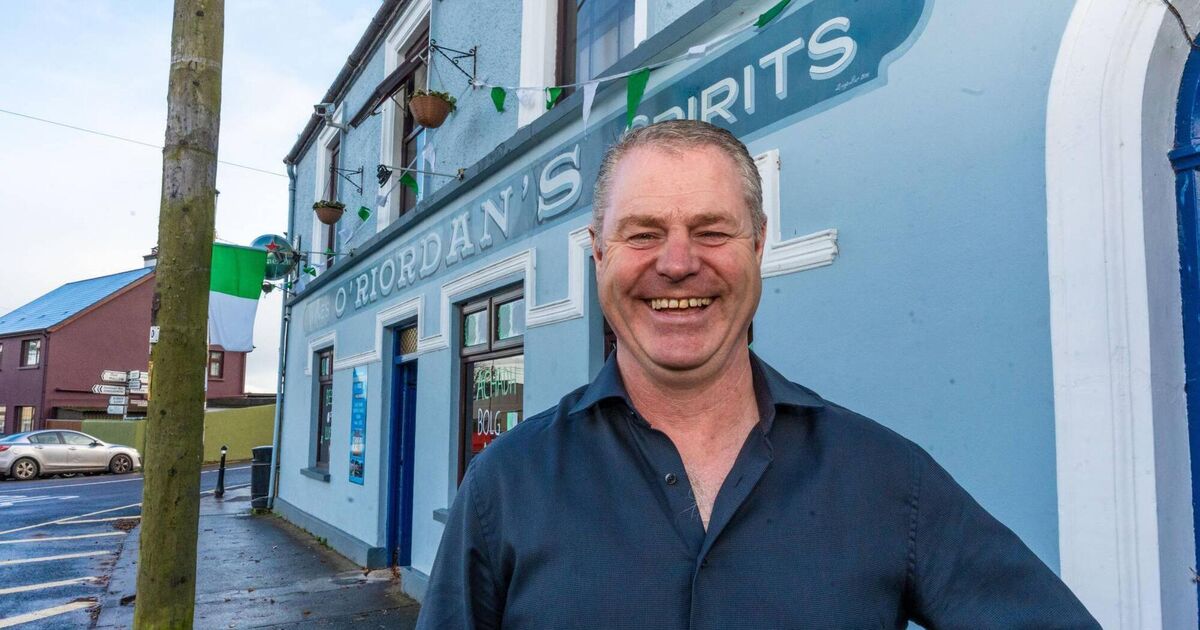
For the last two decades, Pat O’Riordan has steered the ship at O’Riordan’s bar in Coachford, mid-Cork.A farmer’s son who once drove ready-mix trucks around Cork, he never expected he would end up pulling pints in his local.However, since buying the old Coachman’s Inn in 2005, Pat has been central to the pub trade in Coachford, and has watched his village ebb and flow through good times and bad, through periods of emigration, families returning, and Coachford evolving into a vibrant satellite village to Cork city.O’Riordans is one of the few pubs featured in this series that opens seven days a week, offering breakfast, lunch and dinner.What started out as a Saturday and Sunday breakfast offering about a decade ago has grown into a full food operation that now sits comfortably beside the bar trade without overpowering it.“We’re a pub first, a pub that serves food. Not the other way around,” says Pat.“It’s important that people know we’re open. We open from nine o’clock in the morning for food, seven days a week.
“We cater for a working men’s dinner, really. All good local food, produced from local butchers, and vegetables produced locally.
“We made a commitment that we’d be open every day for people; have the door open, have your fire lighting, have a nice, clean, warm bar for them, and have good food on the table.“We’ve silage and building contractors now who ring ahead for their food. If they’re in a hurry, the food is on the table for them.”The O’Riordan’s building has been a pub for more than a century. Coachford itself was always a lively place: the fairs, the Muskerry trams turning here, and the constant footfall of people coming from the surrounding townlands such as Dripsey and Donoughmore.For a village of only 300 people in 2016, the level of activity is surprising to anyone who hasn’t spent time here. But Coachford has a magnetism to it.The schools, the falling-in from different parishes, and the recent sewer upgrade that unlocked more than 100 new homes have revived the place.Pat O’Riordan in the roofed area he renovated as a pool area and back-bar. In the last five years alone, the population has grown significantly - and families are once again settling where their parents once drank and played GAA and soccer.Pat bought the pub at the tail end of the Celtic Tiger years. For two or three years, it was all go - packed weekends, busy nights, lots of money around. Then 2008 arrived.“Every weekend was a going-away party,” he recalls of that recession-hit era. “Parents crying. Lads heading to America, Canada, Australia. Great fellas gone with no work.”From behind the counter, Pat watched his customers, who were also his friends, leave - a familiar story throughout the whole of Ireland at the time.Things eventually picked up, and things eventually normalised in the pub trade, and then covid hit.“That was very tough,” Pat says.But the village rallied. The breweries, Heineken in particular, were supportive. And when the pubs were shut, Pat said something shifted in people.
“People realised what the pub meant. A man said to me once, and he wasn’t even a drinker ‘A pub is more important than a church in the village now’.
“It’s where fellas meet, talk, unload after a hard day.”Coachford is unusual for rural Ireland in 2025: not one, but three pubs are operating in the village.“It’s great to see,” Pat says. “It’s good for the village.”It helps, too, that the village has become a small hub for tourism: fishing competitions in the Lee, rowing in the nearby centre at Farran, traffic passing through from Blarney to Macroom, families heading to Ballyhass Lakes, walkers in Farran Woods, and more recently the Greenway at Rooves Bridge.Pat O’Riordan behind the bar at O’Riordan’s in Coachford. He says: “A pub is where fellas meet, talk, unload after a hard day”.Picture: Noel Sweeney
O’Riordan’s employs 14 people, including chefs and long-serving bar staff, some of whom have been there for 12 or 13 years. Pat doesn’t hesitate to credit them.“They’re fantastic. They treat the place like their own.”All four of his children also worked behind the bar at some stage. One has settled elsewhere, but another has recently returned to the village and is becoming involved in the business.Pat spells out his worries about the future of rural pubs. Like every publican featured in this series, he has felt the pressures of running a bar in rural Ireland.“I don’t think the government really understands,” he says. “They could do a lot more - energy, transport, support for rural business. We’re employing 14 people. That has to count for something.”Another challenge he cites is the younger generation’s reluctance to take on the trade.
“Kids see their parents working 16-18 hours a day, some weeks over 100 hours. They have good jobs now, they’re educated, and they don’t want that commitment,” he explains.
Pat says that a good local bar will sponsor and support local GAA, look out for younger lads, knows who the parents are, will try to spot trouble early, and looks out for its customers in ways that ‘super-bars’ or chain bars simply never could.“If you forget your wallet here and had your dinner, no problem, we’ll sort it next time,” he says. “That won’t happen in a chain. That’s why the local pub is so important. It’s the centre of the village.”O’Riordan’s has developed its beer garden to facilitate live music and has renovated a roofed area as a pool room and a back-bar of sorts.Pat sees the future involving more one-off events, party nights, and things that draw crowds back into rural spaces.“We have to evolve,” he says. “But the pint after work, the chat, the meeting, that’s what keeps it alive.”





Comments (0)