Leveraging assistive technology for inclusive disaster risk reduction and climate action
Download Report
(PDF | 3.01 MB)
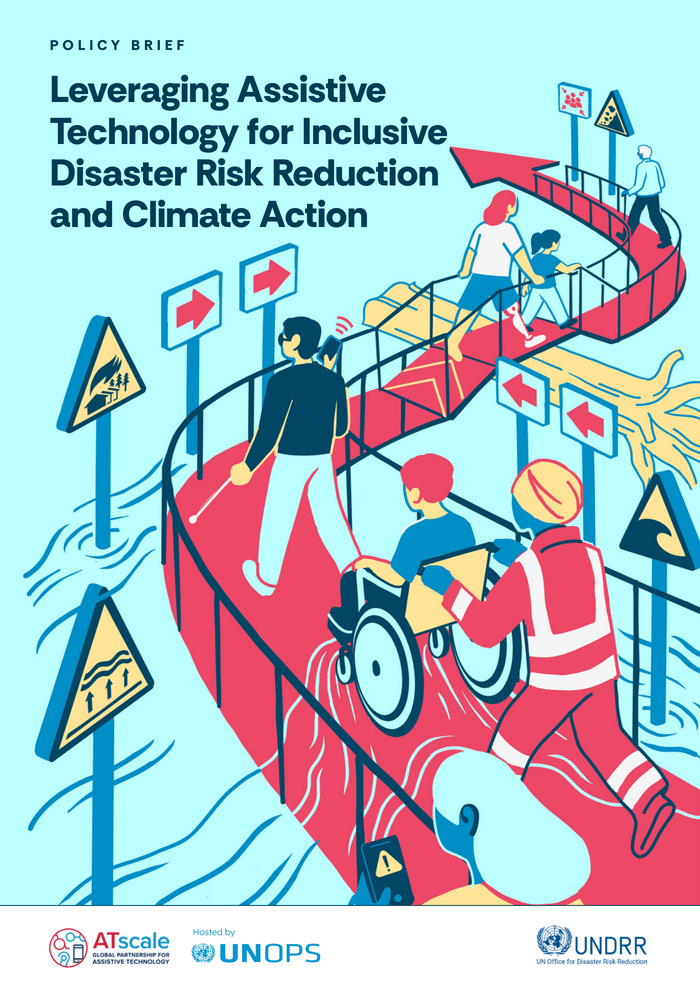
The policy brief outlines clear and actionable recommendations to address the challenges faced by assistive technology users. The United Nations Office for Disaster Risk Reduction (UNDRR) and ATscale undertook a global study and developed this policy brief to examine how the rights and needs of assistive technology users can be more effectively addressed in DRR and climate action. Assistive technology users are often invisible in data systems, excluded from early warning and preparedness planning, and not facilitated in emergencies due to missing or inappropriate assistive products.
Stockpiles frequently contain ill-suited devices, supply chains are poorly coordinated, and rehabilitation services are either underfunded or nonexistent. Infrastructures such as emergency shelters are rarely designed to accommodate assistive technology users, and communication barriers persist from early warning to recovery. Without leadership, financing or clear institutional responsibilities, assistive technology needs are deprioritised or ignored. Preventive measures must prioritise assistive technology inclusion before crises occur, embedding it into early warning systems, contingency planning, and anticipatory financing to reduce risk and safeguard lives. To build responsive, inclusive, and resilient national systems, it is essential that governments, humanitarian actors, and donors engage meaningfully with organisations of persons with disabilities (OPDs) and assistive technology users. This engagement should prioritise co-design approaches, ensuring that persons with disabilities are actively involved in shaping solutions that affect their lives.