Europe’s psychology of weakness
Instead, we’ve seen dithering and the triumph of small thinking. It’s also rather telling that the U.S. attempt to simply impose how these assets are to be used, with 50 percent of the profits going to Washington instead of Kyiv, is finally jolting Europe into action.
Regrettably, Europe’s psychology of weakness is equally visible in the economic domain, as the EU-U.S. trade agreement struck this July was a classic case of how frailty can masquerade as “pragmatism.”
Brussels had the tools to respond to Washington’s tariffs and coercive measures, including counter-tariffs and its anti-coercion instrument. But under pressure from member countries fearful of broader U.S. disengagement from European security and Ukraine, it chose not to use them. The result was a one-sided “deal” with a 15 percent unilateral tariff, which breaks the World Trade Organization’s rules and obliges Europe to make energy purchases and investments in the U.S. worth hundreds of billions of dollars.
Even worse, the deal didn’t produce the stability advertised as its main benefit. Washington has since designated Europe’s energy transition measures and tech regulations as “trade barriers” and “taxes on U.S. companies,” signaling that further retaliatory steps may follow. Just last week, the U.S. upped the pressure once more, when its trade representatives met EU ministers and openly challenged existing EU rules on tech.
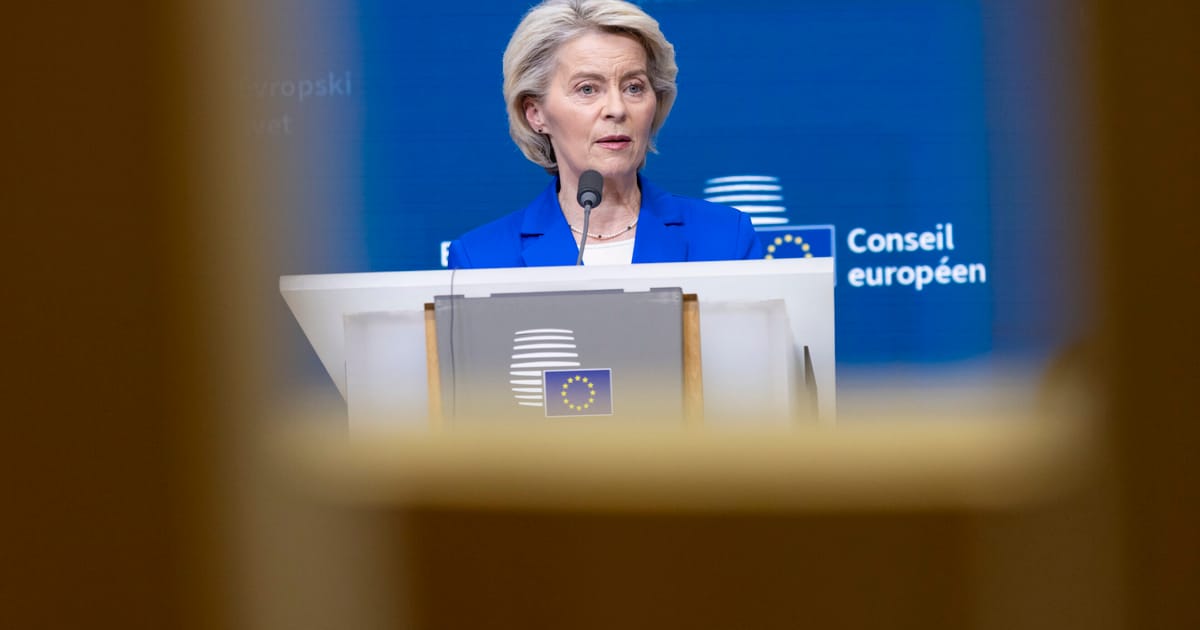
Regrettably, Europe’s psychology of weakness is equally visible in the economic domain, as the EU-U.S. trade agreement struck this July was a classic case of how frailty can masquerade as “pragmatism.”. | Thierry Monasse/Getty Images
More than on defense, the EU is meant to be an economic and regulatory superpower. But despite decades of leveraging its economic weight for political purposes, the EU is now adrift, faced with a widening transatlantic power play over trade and technology.
Similar patterns of retreat mark the EU’s actions in other areas as well. As Russia escalates its hybrid warfare operations against the bloc’s critical infrastructure, Europe’s response remains hesitant. As China dramatically weaponizes its export controls on critical mineral exports, Europe continues to respond late and without clear coordination. And in the Middle East, despite being one of the leading donors to Gaza, Europe is peripheral in shaping any ceasefire and reconstruction plans.