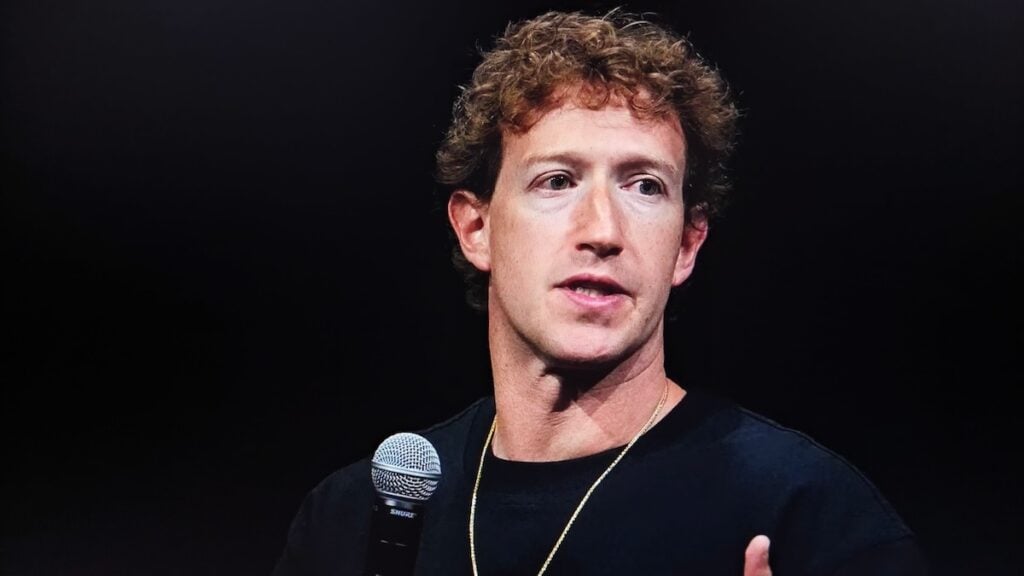
Elon Musk, Mark Zuckerberg, Jeff Bezos, and Bill Gates are breaking wealth records while orchestrating layoffs affecting thousands of workers in the tech sector.
The surge in wealth of Elon Musk, Sundar Pichai, Mark Zuckerberg, Jeff Bezos, and Bill Gates is occurring amidst cuts that are eliminating thousands of jobs and revealing an industry undergoing accelerated restructuring driven by artificial intelligence.
The current scenario exposes a clear contradiction in the technology sector, because the expansion of the wealth of top executives occurs while thousands of workers face successive layoffs. This combination reveals a stark contrast between the increased value placed on leaders and the instability experienced by professionals in different fields.
The actions of the most influential leaders
Elon Musk remains a decisive figure in electric mobility, leading Tesla, as well as SpaceX, and promoting projects related to artificial intelligence and advanced communication. Sundar Pichai heads Alphabet and Google, managing a technological infrastructure that supports widely used platforms and services essential to the development of AI and cloud computing.
Mark Zuckerberg leads Meta, the company behind Facebook, Instagram, and WhatsApp, and maintains its global reach based on data and digital communication.
— ARTICLE CONTINUES BELOW —
See also other features
An O-shaped wind turbine promises to capture wind from all directions, generate more energy in cities, cost up to 1000 euros, and reach the market between 2026 and 2027 with unprecedented technology.
With 6.000 Airbus A320s grounded due to a sun-related failure, an alert reveals how a simple G1 storm can corrupt chips, bring down satellites, disrupt GPS, and threaten entire power grids.
China tests in simulation how to block Starlink in Taiwan, discovers that Elon Musk's network requires nearly a thousand coordinated jamming drones in the sky, and exposes a huge challenge for electronic warfare.
An 11-year-old Neolithic structure has been found in Türkiye, revealing an amphitheater with sculpted human figures and three levels of seating.
Jeff Bezos created Amazon in the 1990s and transformed a small online bookstore into a company that revolutionized e-commerce, delivery systems, and cloud storage. His presence in the aerospace sector with Blue Origin reinforces his investment in technologies considered strategic.
Bill Gates pioneered the use of software for consumers, founding Microsoft and expanding personal computing. Even though he is no longer involved in day-to-day activities, he retains significant influence through initiatives focused on health, education, and technological processes.
A period marked by restructuring.
The sector is going through a cycle of cuts that remains active. This fall, projections point to further layoffs, totaling tens of thousands of job losses. This movement is not an isolated event and follows a trend observed even during periods of increased profits driven by advances in artificial intelligence.
The layoffs began in 2024, when at least 95.000 job cuts were recorded at major technology companies in the United States.
The trend continued into 2025. Amazon, for example, is estimated to have eliminated up to 14.000 corporate positions, and that number could reach 30.000, impacting sectors such as AWS, retail technology, and administrative areas.
Microsoft followed a similar path. The company carried out several rounds of cuts throughout the year. In May, it reduced approximately 6.000 jobs.
In July, it eliminated another 9.100 jobs, primarily affecting engineering, gaming, and product development. Alphabet has adopted targeted layoffs in segments such as Cloud, Android, Pixel, and corporate functions, further reducing its management positions by almost 35% to simplify its internal structure.
Meta and Tesla presented less drastic adjustments after significant cuts made previously. This stance, however, preserves the general pattern: the sector is reorganizing to concentrate resources in areas considered strategic in the transforming environment driven by AI.
The corporate discourse on automation
The justifications presented by the companies are based on the need to adapt to a new scenario. Advances in AI and automation favor the optimization of processes and the elimination of redundancies, increasing productivity per employee.
The imbalance is believed to have started with the intense hiring that followed the pandemic, when demand for digital services grew rapidly and led to... companies to expand its workforce at an accelerated pace. Now, this expansion would be beyond what is sustainable.
The redistribution of investments also reinforces this movement. Companies are concentrating capital in data centers, AI-focused infrastructure, chips, automation, and cloud solutions.
These segments are showing significant growth in the stock market and indicate high returns, justifying the financial and operational focus in these areas.
The inequality between gains and cuts.
The advancement of AI and the rise in stock prices have significantly increased the wealth of founders and executives. According to the Bloomberg Billionaires Index, Elon Musk and Jeff Bezos have an estimated wealth of hundreds of billions of dollars, demonstrating the magnitude of this combination of technology and the market.
CEO compensation has reached unprecedented levels. In 2024, the CEO of Amazon received approximately US$40,1 million, driven by increased stock value.
For employees affected by the layoffs, this contrast sends a harsh message, as their jobs disappear while the leadership accumulates substantial increases in their fortunes.
This scenario raises questions about the logic adopted by companies and generates social unrest. The pattern of continuous adjustments and concentration of wealth impacts not only employment, but also highlights an expansion model that prioritizes efficiency and scalability.
The impact of the new model
AI-driven automation is reorganizing work structures and redefining priorities within companies. This shift favors higher value-added sectors while pointing towards a reality marked by the reduction of traditional positions.
The technology sector presents a divided landscape. On one hand, there are productivity gains and advances in AI. On the other, workers face instability and increasing inequality.
Executives and founders increase their fortunes with rising stock prices, while thousands of people lose income and stability in processes that appear to have no immediate reversal. This duality exposes a sector that evolves rapidly but produces significant impacts on the lives of those who form its operational base.