The endearing reason Prince Philip gave up smoking on the morning of his wedding to Queen Elizabeth II
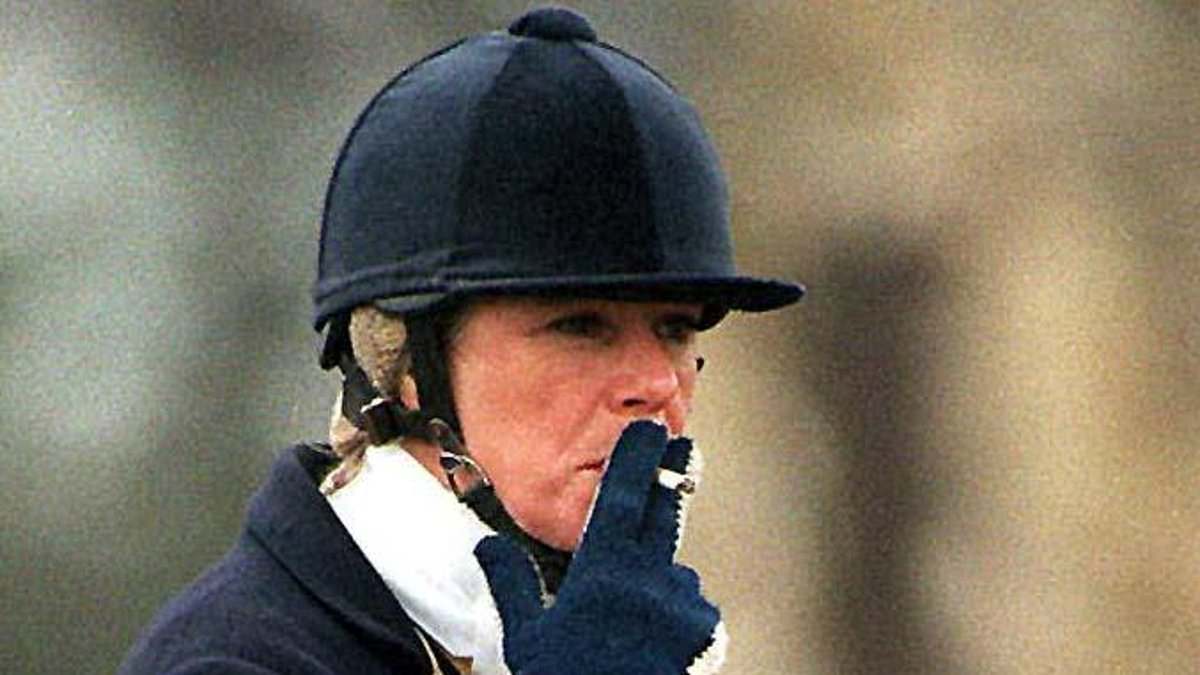
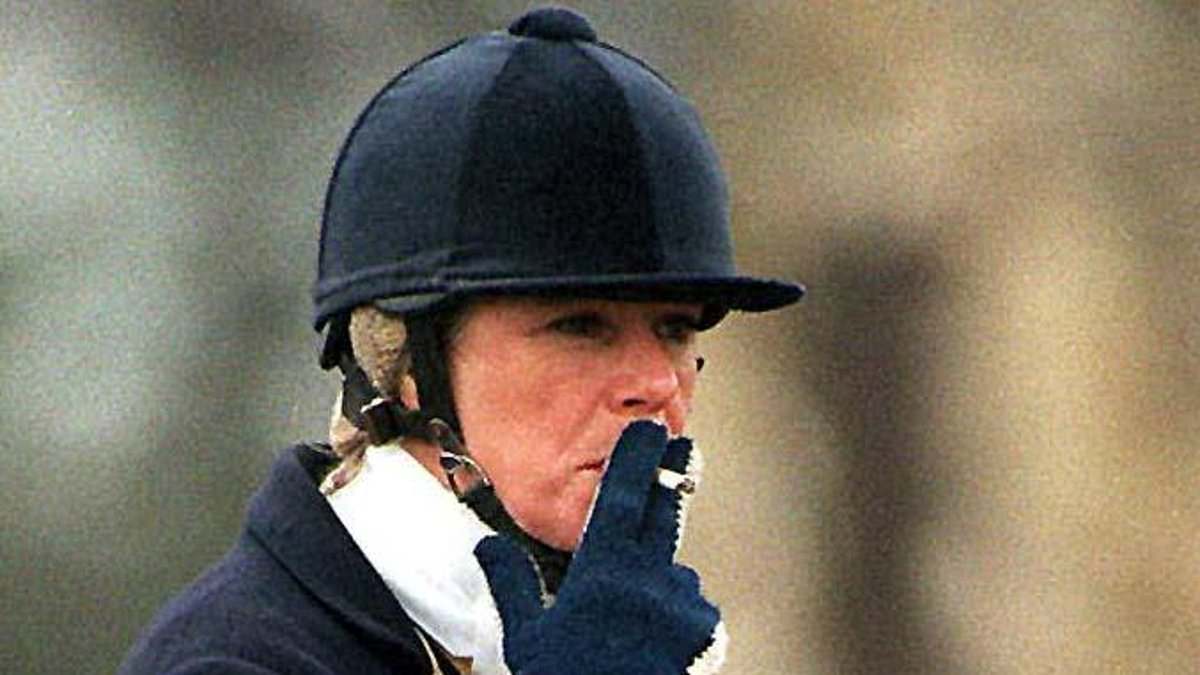
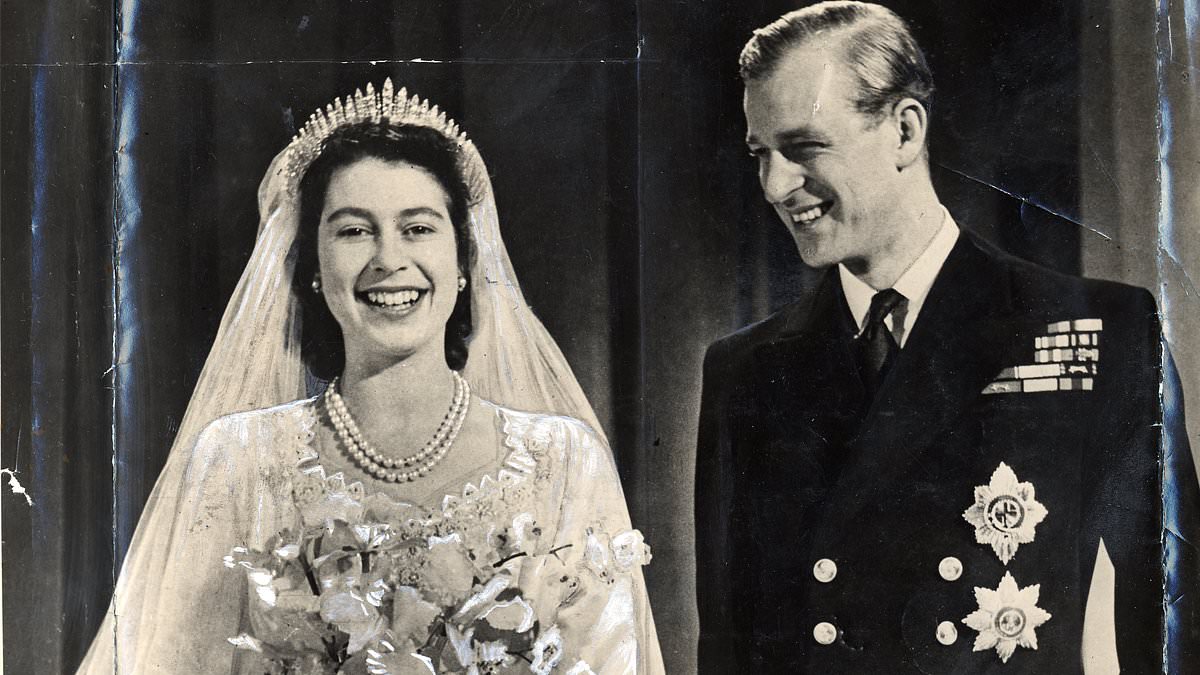
The fairytale romance of the late Queen and Prince Philip began with love at first sight - with the pair first meeting when Elizabeth was just eight years old in 1934.While they were still too young for a relationship, when the two crossed paths again in Dartmouth in 1939, sparks soon flew as the 13-year-old princess 'never took her eyes off' Philip Mountbatten, then 18, according to Marion Crawford, Elizabeth's nanny. What followed was nothing short of a idyllic love story that led to a joyous engagement in July 1947 - with the happy couple appearing on the balcony of Buckingham Palace to the roaring sound of cheering crowds. The news was a welcome ray of light within a bomb-scarred London still recovering from the detrimental impacts of the Second World War.Increasingly fatigued with the trials and tribulations of wartime, the nation eagerly set their sights on the glitz and glamour of an upcoming royal wedding - due to be held just four months later on November 20, 1947, at London's Westminster Abbey.In a particularly indicative sign of his unwavering commitment to his bride-to-be, Philip even gave up smoking on the morning of their wedding, despite it being a favourable 'family habit' instilled by Queen Mary, who was a keen smoker. Writing in his book Philip: The Final Portrait, royal biographer Gyles Brandreth detailed their fairytale wedding, including a number of errors that saw the day precariously hang in the balance alongside Philip's decision to quit smoking at Elizabeth's request.Explaining the Princess' reasoning for pleading with her new fiancé to quit the addictive habit, Mr Brandreth wrote: 'Princess Elizabeth saw the effect cigarettes had on her father and did not want her husband to smoke.' Increasingly fatigued with the trials and tribulations of wartime, the nation eagerly set their sights on the glitz and glamour of an upcoming royal wedding - held on November 20, 1947 at London's Westminster AbbeyKing George VI was a habitual smoker and it played a large part in his death, with the former Monarch tragically passing away from lung cancer on February 6, 1952, after 16 years on the throne.The Queen's sister Princess Margaret was also a notorious smoker and, in her heyday, was known for smoking '60 cigarettes a day'.Yet incredibly, despite being a notoriously challenging habit to break, Philip, who was more than 'happy enough to oblige' with his fiancée's stern request, was even 'disciplined enough to be able to do so overnight'.As Bryan Kozlowski writes in his book, Long Live the Queen: 23 Rules For Living From Britain's Longest Reigning Monarch, Philip quit smoking 'suddenly and apparently without difficulty' on the morning of his wedding ceremony, according to his valet.Kozlowski continued: 'Previously a heavy smoker himself, Philip obliged with phenomenal efficiency, going from a pack a day to quitting cold turkey on his wedding day.'During his last moments as a single man, he was seen relishing his final cigarettes. Surrounded by his naval friends and uncle during his bachelor party at the luxurious Dorchester Hotel, pictures showed Philip sharing cigars with Lord Mountbatten and his private secretary Michael Parker. Despite his determination to to abide by his soon-to-be wife's wishes, Philip may well have been keen to enjoy a cigarette on the morning of his nuptials in a desperate bid to calm his pre-wedding nerves.According to Mr Brandreth, the groom was said to have awoken and felt rather 'uncertain' at the prospect of marriage and indeed the significant implications it would have for his future. In a particularly indicative sign of his unwavering commitment to his bride-to-be, Philip even gave up smoking on the morning of their wedding. Surrounded by his naval friends and uncle during his bachelor party, he was seen relishing his final cigarettes as a single man King George VI (pictured) was a habitual smoker and it played a large part in his death, with the former Monarch tragically passing away from lung cancer on February 6, 1952, after 16 years on the throneWhile Philip was certain in his love for Elizabeth, according to his cousin, Patricia Mountbatten, he remained 'apprehensive' about 'what the marriage would mean to him' and, in particular, what he would be 'giving up' by marrying the future Queen.She recalled: 'We were alone together and I said something about what an exciting day it was and, suddenly, he said to me, "Am I being very brave or very foolish?".''He was giving up a great deal,' she added. 'In many ways, nothing was going to change for her. Everything was going to change for him.'Certainly, marrying the future Queen would no doubt mean an end to his beloved Royal Navy career and any remanence of freedom of privacy. Yet, it was a choice Philip was happy to make.And never wavering in his promise to his fiancée, Philip instead settled for a gin and tonic to calm his feelings of angst ahead of their nuptials.Dressed in a naval uniform which sported the insignia of a Knight Companion of the Order of the Garter and wearing the ceremonial sword owned by his grandfather, Philip was accompanied by his best man, David Milford Haven, to Westminster Abbey.Yet the morning did not go quite as smoothly for the beloved Princess, 21, who had began her nuptial preparations at Buckingham Palace in the early hours.Ms Crawford, affectionately known as 'Crawfie', recalled bringing the bride-to-be a cup of tea in her room at the palace where she found the Queen 'peeping excitedly out of the windows at the crowds'. The Queen's sister Princess Margaret was also a notorious smoker and, in her heyday, was known for smoking '60 cigarettes a day'. Yet incredibly, despite being a notoriously challenging habit to break, Philip, was 'disciplined enough' to be able to quit 'overnight''I can't believe it's really happening. I have to keep pinching myself,' she exclaimed.Following a fitting of an hour and ten minutes, Elizabeth stood proudly in her impeccable gown - designed by Norman Hartnell just three months before the wedding, it had been paid for with up to 300 hundred ration coupons and came at a cost of £1,200.Hartnell's creation had a simple cut with a fitted bodice, heart-shaped neckline with a low v-pointed waist and a floor-length panelled skirt. It also featured a 15-foot silk tulle full court train, which was attached at the shoulders, is embroidered in pearl, crystal and transparent applique tulle embroidery. It took both him and a team of 350 seamstresses seven weeks to create, with the gown, made of Duchesse satin from Scotland and silk, creating a 'ravishing' effect. Yet despite being a royal wedding that had involved an incredible degree of planning, 'last-minute dramas' on the day were almost inevitable, with even royalty unable to evade 'the tensions common to any home on a wedding morning'.Indeed, in a rather anxious state of affairs for Elizabeth, her all-important bouquet had been misplaced.While a footman had remembered receiving it and bringing it upstairs, a short period of momentary panic ensued when he failed to place it. Fortunately, he remembered putting it into a cool cupboard nearby 'for safekeeping' and it was swiftly given to the Princess.Then, the all-important tiara given to the Princess by Queen Mary 'snapped' just as it was being delicately placed upon her head. Despite being a royal wedding that had involved an incredible degree of planning, 'last-minute dramas' on the day were almost inevitable. Elizabeth's all-important bouquet had been misplaced, her tiara snapped and her pearl necklace was left at St James's PalaceOnce again, the near-fatal error was quickly resolved- with a sea of 'nervous hands' working quickly to fix the issue.Yet neither of these blunders compared to the next issue the bride faced. As the Princess prepared to put on her double string of pearls - a wedding gift from her beloved parents - she realised that they were half a mile away at St James's Palace.The all-important task of retrieving the pearl necklace fell on the shoulders of her newly appointed private secretary, Jack Colville, who the Princess politely requested made the journey to retrieve the pearls.'I looked at my watch,' he recalled. 'I rushed along the corridor, I galloped down the Grand Staircase and into the main quadrangle of Buckingham Palace.'The Princess had given Mr Colville the go-ahead to take any car available and so, he 'cried to the chauffeur' and 'flung open the door' of the first car he saw.But just before he could step into the car, King Haakon VII of Norway emerged and comically quipped: 'By all means have my car, but do let me get out first'.There was to be more trouble for Mr Colville, who had to plead with the staff at St James's Palace to grant him access to the royal wedding gifts that were being stored there on the day.Eventually proving his important relation to the bride as a result of his name appearing on the official Wedding Programme, he successfully 'escaped with the necklace' and quickly raced back to Buckingham Palace with just 'moments to spare'.After a rather eventful morning, at 11.15am, Elizabeth now carrying her bouquet, wearing her parents' beloved pearls and donning her grandmother's 'precious' tiara, clambered into the Irish state coach alongside her father, George VI. But despite the blunders, Elizabeth successfully arrived at Westminster Abbey carrying her bouquet, wearing her parents' beloved pearls and donning her grandmother's 'precious' tiara. She exited the Irish state coach alongside her father, George VI The historic wedding event was recorded and broadcast by BBC Radio to 200 million people all around the world. It was a dazzling display of ceremony and splendour, bringing true warmth to a nation that had become weary with war and austerityShe was joined by eight bridesmaids, including her sister, Princess Margaret, her cousins, Princess Alexandra of Kent and Margaret Elpinstone, Philip's cousin, Pamela Mountbatten and her niece, Diana Bowes-Lyon.Each one wore a gown by Hartnell of tulle with small satin flowers - a reverse of Elizabeth's dress.The historic wedding event was recorded and broadcast by BBC Radio to 200 million people all around the world. It was a dazzling display of ceremony and splendour, bringing true warmth to a nation that had become weary with war and austerity.The Princess became the tenth member of the British Royal Family to marry at the Abbey - the same venue her father was crowned 11 years earlier and where she herself would be given the all-important task of Queen five years after her nuptials. In a rather touching detail - during the ceremony, she received a wedding ring made from the same Welsh gold as her mother's ring, which came from the Clogau St David's mine. According to royal biographer Ingrid Seward writing in the book, Prince Philip: Revealed, it was specially engraved with a secret message that only the bride, the groom and the engraver knew of.Following the ceremony, the newlyweds travelled to Buckingham Palace and famously waved to the crowd of roughly 100,000 well-wishers from the balcony before heading inside to enjoy an intimate wedding breakfast for just 150 guests.At their breakfast, the happy couple served a whopping 11 cakes. Their large 9-foot wedding cake, created by McVitie & Price, boasted four tiers and weighed 900 pounds, according to the Royal Collection Trust. As the couple left for their honeymoon in an open-drawn carriage, they were showered with rose petals by the Queen Mother. Elizabeth also had her corgi Susan on her lap, peeking out from under a rug Not only did Prince Philip remain duly committed to his beloved wife throughout their 73 years of marriage, he also never smoked again, in line with the Queen's wishes. The pair's deep, unwavering love was at the heart of the modern British monarchy Nicknamed the 10,000-mile cake for its internationally sourced ingredients, it was so big that it was cut with the groom's naval sword - a present from King George VI.As the couple left for their honeymoon in an open-drawn carriage, they were showered with rose petals by the Queen Mother. Elizabeth also had her corgi Susan on her lap, peeking out from under a rug.The joyous celebrations marked the start of what would go on to be an incredible love story that transcended the decades - with the couple sharing four children - King Charles, Princess Anne, Prince Edward and former Prince Andrew.And not only did Prince Philip remain duly committed to his beloved wife throughout their 73 years of marriage, he also never smoked again, in line with the Queen's wishes.The pair's deep, unwavering love was at the heart of the modern British monarchy and survived numerous royal scandals and disasters. Serving as a beacon of constancy and affection, the married couple remained together until the very end.Following Philip's tragic death, aged 99, on April 8, 2021, the heartbreaking scene of the late Monarch forced to sit alone at his funeral due to coronavirus restrictions was just a further demonstration of their commitment to the vows they shared 78 years ago - 'till death do us part'.All throughout his life, the Prince's adoration for his wife and devotion to their marriage never wavered. His desire to always do right by Elizabeth was perhaps most poignantly illustrated by a reflective conversation shared by his first ever private secretary, Michael Parker. 'He told me the first day he offered me my job that his job, first, second and last was never to let her down,' he recalled.There is certainly little doubt that Philip successfully fulfilled that wish - remaining firmly committed to the Monarchy, the nation and, most importantly, his beloved wife.